


Known as the year of the great resignation, some studies indicate one third of working people in the U.S. left their careers in 2021.
Faced with the stress of COVID-19 on them and their congregation, many pastors also said they could take no more and resigned their positions.
The Rev. Steve Prevatte, pastor of the Community Church at Tellico Village, said studies confirm the toll on the clergy.
“Navigating the Pandemic: A First Look at Congregational Responses,” a Hartford Institute study, shows as many as 67% of clergy said 2020 was the hardest year they had faced. The study said only 8% seriously considered leaving the clergy but 37% had given some thought during the year.
“I think 2020 was my hardest year in the ministry,” Prevatte said.
The difficult issues he and other pastors faced included whether or not to hold services in person and the stress of illness and deaths among congregants. Pastors also faced the challenge of being “ghosted” by church members.
“Some of them just disappeared and we didn’t hear from them again,” Prevatte said.
The issues became even more controversial — and sometimes confrontational — over decisions such as whether masks, vaccinations and lockdowns were necessary, the Rev. Amy Cook, pastor of Loudon United Methodist Church, said.
“I had people tell me they would walk out the door if they had to wear masks,” Cook said. “I told them I’d rather have them walk out than be carried out.”
Cook said she knows several members of the clergy who took leave due to the stress of pastoring during the pandemic. Four area pastors died as a result of COVID, she added.
The Rev. Amy Moorehouse, pastor of the Episcopal Church of the Resurrection in Loudon, said COVID was particularly stressful on clergy.
“Clergy care for their flock,” she said. “It hurts to see our flock suffer.”
Even before the pandemic, many churches have been facing the issue of “minister burnout,” Prevatte said.
“A huge number of pastors have been thinking about getting out of ministry altogether,” he said.
The Christian church has tried to address the issue by creating the Doctorate in Ministry program for pastors who have been out of seminary for at least five years.
Earlier in his career, Prevatte said he faced burnout and decided to engage in what is called Clinical Pastoral Education. He worked for 18 months part time in a hospital as a chaplain while studying. For three years, he pastored at a Presbyterian church in Greeneville, S.C., before coming to CCTV.
The experience allowed him to gain new perspective on his calling and helped prepare for the next stage at CCTV, which is an interdenominational church.
CCTV provides a sabbatical to pastors after six years of service. Prevatte recently returned from a sabbatical, which included a variety of experiences ranging from international travel to attendance at clerical conferences and time outdoors.
The term “sabbatical” is derived from the sabbath, which is a day of rest. Sabbaticals can be academic, corporate and ministerial. Even more than rest, a ministerial sabbatical is supposed to be a time of renewal.
“The objective for a sabbatical is a renewal of your faith and understanding of the goodness of God,” Prevatte said.
Examples of sabbaticals in the Bible include Jesus, John the Baptist and Paul, all of whom went to far away places, often in the desert, to be alone for periods in their life.
“Throughout the gospel you see Jesus going away alone,” he said.
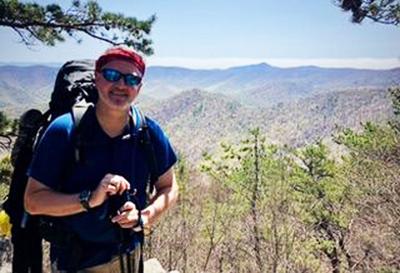
Prevatte’s sabbatical began at the end of May with a two-week, 80-mile hike on the Appalachian Trail with friends. He said he enjoyed the opportunity to get exercise, reconnect with friends and find spiritual renewal in nature.
“A lot of steps I took were prayers,” he said. “I was asking God where he wanted my church to be.”
The next stage of the sabbatical was a trip to Saint John’s Abbey in St. Cloud, Minn., for a week living at the Benedictine monastery. After getting his body in shape, the monastery offered the opportunity to exercise his spirit. He said he attended prayer services three times a day.
“It was a very spiritual place for me,” he said.
In the middle of May, Prevatte and his wife, Kelli, traveled to Europe to attend a passion play in the medieval German village of Oberammergaau. The Broadway-worthy performance by the people of the village depicts the death and resurrection of Jesus Christ.
Village residents have performed the play every 10 years to fulfill a promise made during the 17th century when plague threatened the community. Prevatte visited castles and cathedrals in Germany and Austria before heading to Italy to visit religious sites, including the catacombs where Christians worshipped in secret during the early days of the church.
Back in the U.S., he attended a preaching conference in Notre Dame, Ind., for several days, where he listened to lectures from noted theologians. One particularly meaningful lecture explained how to improve sermons by telling stories that reinforce the Bible passage.
Prevatte said one of the lecturers advised him, “When Jesus told a parable, he lit a stick of dynamite and he covered it with a story.”
At the end of June, he spent time with family at a beach in North Carolina. He ended July by attending a Habitat for Humanity conference in Tennessee before returning to CCTV.
He said the sabbatical fulfilled his goals of rest and renewal, giving him perspective on faith and worship difficult to experience under the routine of pastoring a church.
“A congregational ministry is 24-7 and it wears on you,” he said.
Kelli agreed the stress of the last few years and the responsibilities of pastoring a church can be a heavy burden.
“It wears on a family also,” she said.
As much as Prevattee enjoyed getting away, he said he was excited to return to share his experiences with the congregation and get back to pastoring in the community. Prevatte said he is thankful his church provided such an opportunity and support.
Not all congregations provide sabbaticals to their pastors, but several local churches do. The Rev. John Hunn said First Baptist Church in Lenoir City offers a sabbatical after seven years of service.
Moorehouse said the Episcopal Church of the Resurrection provides sabbaticals after five to seven years. She said she is looking forward to sabbatical next year.
Cook said the Methodist church believes in sabbaticals in principle but not all churches can afford to provide them.
“I think it’s a great idea,” she said.


