



TELLICO VILLAGE, Tenn. — During the Tellico Village Birding Club’s monthly meeting held Tuesday, Aug. 5, Clare Dattilo — a ranger from the Seven Islands State Birding Park in Knox County — came to talk about the process of “bird banding.”
Bird banding is the crucial process of tagging birds on the leg in order to gain data and information about certain species. … In this case, the Seven Islands State Birding Park does it to gain data and information about the birds that live in East Tennessee.
It is a safe process that is all done in the name of scientific research.
Brief History of Bird Banding
Bird banding began as early as the Punic Wars (264-146 BC) between the Roman Republic and the Carthaginian (Punic) empire. During this time, Roman officers would tie bands to birds’ legs to show ownership or send messages to others.
“It was not used as much for scientific reasons,” Dattilo said. “It was more so used for humans to communicate with one another.”
These early instances of bird banding, along with others, eventually accumulated into the foundation of the American Bird Banding Association. This was founded in 1909 by University of Wisconsin ornithologist Leon Cole.
This created an organized platform for bird banding to be done in the name of science, which is what Dattilo and the Seven Islands State Birding Park look to accomplish.
The Bird Banding Process
Those with a federal and state banding permit can undergo the process of bird banding for scientific purposes.
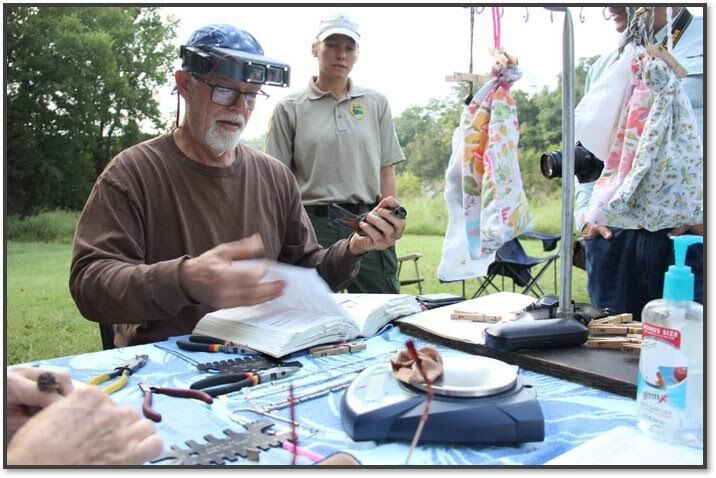
The process begins with a mist net used to catch the birds that are flying by. The net is designed like a volleyball net with pockets built within it. This is a cushioned surface meant to keep birds safe while being caught.
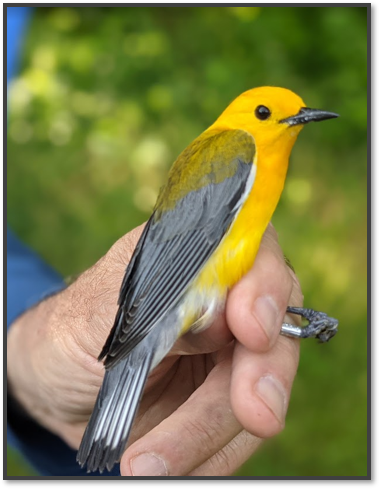
Once the birds are caught in the net, they are taken out of it by trained volunteers and bird banders and placed in soft bags. After that, the bird is ready to have a band with a nine-digit number placed around its leg.
“The bag keeps them calm and safe until we can get them through the whole process,” Dattilo said. “Afterward, they are safely released.”
Using a pair of bird banding pliers, the band is opened and then clipped on to the bird’s leg. The legs of the bird are measured with a gauge in order to get the size of the band right.
The process includes measurements taken by bird banders, as well. Some of the parts of a bird that are measured include its wing length, tail length and weight. And, sometimes, even the bill length of the bird is measured … depending on the species.
Motus Towers and Tracking Banded Birds
The metal bird banding tags — such as the ones Seven Islands State Birding Park uses — don’t track the birds like a GPS device would. Datillo went over the technicalities.
“The only time we get information about banded birds is when we re-catch them,” the park ranger said. “When we are banding stations, we do get a lot of re-catches.”
However, a motus tower is located in the Seven Islands State Birding Park in Kodak. These towers are spread out around the world and pick up a banded or tagged bird as they fly by.
“We [Seven Islands State Birding Park] are actually in the process of starting a project where we will utilize these towers more with sparrows,” said Datillo.
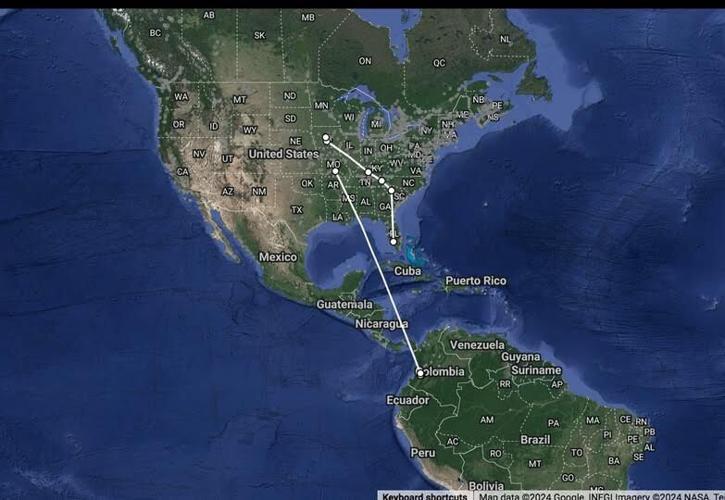
The park ranger showed the Tellico Village Birding Club members an example of these motus towers in use when they tracked a Lesser Yellowlegs that was banded in South America.
The bird flew north into Missouri and Iowa, and then up through Kentucky, Tennessee and South Carolina. It ended up in Florida.
“With these towers, we can also track migration routes,” Datillo said.
Upcoming Tellico Village Birding Club Events and More
Joe Lewis, who helps to run the Tellico Village Birding Club, revealed some upcoming events the Club has to offer in the future.
On Sept. 2, at the Chota Recreation Center, a guest speaker with live birds of prey will be in attendance to show off different birds such as Barn Owls and Screech Owls.
For a calendar of events and more information about the Tellico Village Birding Club, you can visit tvbirdingclub.org.


