


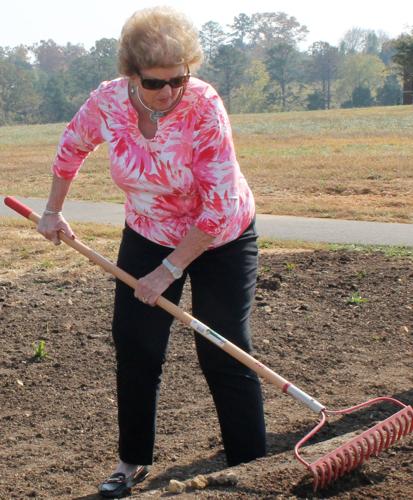
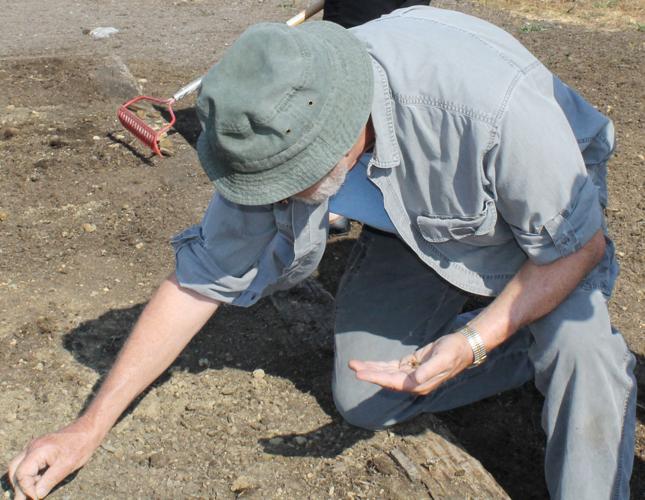
After putting in mushroom soil, members of the Tellico Village Garden Club added seeds from assorted packets of monarch habitat mix to save the declining monarch butterfly population, which Bill Reeves, chief biodiversity officer with the Tennessee Wildlife Resources Agency, spoke about last year.
Members then asked Chad Johnson, who works as the Property Owners Association public works department horticulturist, to construct a butterfly box to the left of the Wellness Center.
“The population of monarch butterflies has plummeted more than 90 percent since the mid-1990s, according to the Natural Resources Defense Council,” Tim Pyles, a member of the garden club, said. “The increased use of the herbicide glyphosate has been identified as a major culprit in killing the native milkweed that monarchs need to thrive. In addition, large swaths of prairie that support the plants needed by the monarchs are being reappropriated by humans for farming and development.
“Reeves has been spearheading a project in Tennessee to provide free seed packets to grow milkweed and similar plants that the monarch larvae can eat in order to reproduce,” he added. “With the help of Chad Johnson from Public Works and the POA, a small garden has been established near the walking track at the Wellness Center to plant milkweed and other related plants. Hopefully in a year or two, walkers will be able to enjoy identifying a ‘crop of monarchs’ taking flight over Tellico Village.”
Cae Daly, president of the garden club, said Pyles deserves credit for moving the project forward.
“Butterflies actually are pollinators,” Daly said. “They are pretty pollinators. That garden also helps all of our other pollinators. Farmers need pollinators. They are in trouble. So we’re losing a lot of our pollinators, and that’s why we’re concerned.”
Since planting the seeds a couple weeks ago, Daly said there’s nothing to maintain until next spring.
“Hopefully, not too much because it’s all natural,” she said. “The seeds we planted were especially for this area, so they should be your native weed, so to speak. The monarch butterfly has the milkweed and other things. They’re all plants that will help the pollination. Our butterflies and our monarch butterflies on their trip each year, they really have no place where they can stop. Our hopes are really high that we will have a beautiful butterfly garden come next spring and sometime next summer, we will have a butterfly release at that garden.”
Chuck Cruickshank also helped with the garden setup, explaining his concern for the habitat deterioration.
“Part of that is due to urban sprawl and deforestation,” he said regarding the decline in population. “...The bottom line is the population is going down. What we’re trying to do is reestablish some of these native species to come in here and feed, lay their eggs and hatch the next breed and go on. What a lot of people don’t know is that when we lived in Minnesota, they would actually stop and have young along the way. It’s the young that move. We’re trying to reestablish that.”
Cruickshank said it’s important to create undisturbed places for butterflies to gather.
“The real main flyway for that is the Mississippi fly basin,” he said. “We have a few monarch butterflies that come through here. ... Here at home, we’ve got butterfly bushes in our garden and we’ve had an unbelievable amount over the last several weeks. We’re just trying to help nature along a little bit and reestablish some of these perennial species.”
Seed packets are available at the Welcome Center, although Patty Robichaud, public relations assistant, said she only had 12 packets left as of Thursday.


