


LENOIR CITY, Tenn. — Lenoir City resident Patty Suerth lives in an older home. It’s one that’s been passed down from her grandmother to her mother, then to her and hopefully her children when the time comes.
However Suerth’s home, like others around her, is having a hard time keeping up with the Jones’s as what feels like a constant string of new developments keeps pouring in.
When the growth finally breached her neighborhood along Church Avenue and Mincey Street, she found that the cost to maintain the tradition of the residence was much more than she had previously anticipated.
However, it’s not that Suerth is against additional housing altogether. She and a lot of her neighbors seem to grasp its inevitability.
According to her, the real issue arose when construction began on a development near her home that produced stress on her mostly galvanized systems that have yielded thousands of dollars in repairs and unusually high water bills.
Her real frustration is directed at Lenoir City Utilities Board (LCUB) and the city itself, who she says gave little to no notice that damage to her home could be a side effect of construction.
“Leon [Shields] said he knew the older houses were going to have problems,” Suerth said. “Well, you know what? If you knew about it, maybe you should have sent out a letter before you started construction.”
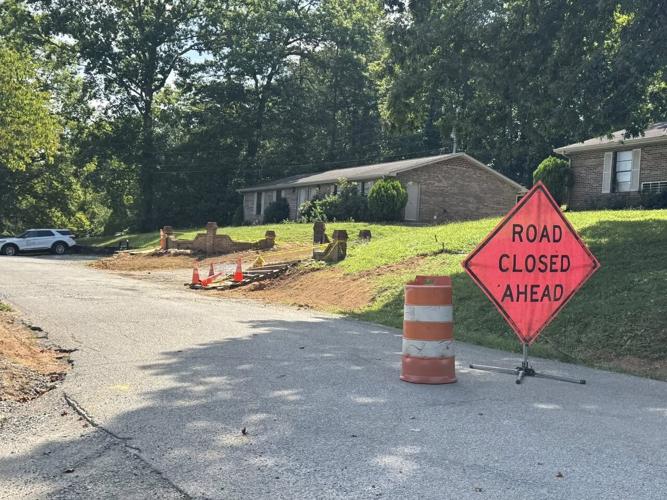
Construction began some months ago with Turner Homes being employed to build new housing in a subdivision near Church Avenue, Mincey Street and Tenth Avenue, at the top of the hill and past the downtown water tower.
The houses being built were installed with new, more high-pressure water systems — far past the standard that many of the current dwellings in the area were operating under. Once construction began, so did the problems.
Suerth said she had to get handymen out to her house on three separate occasions to re-fix her water meter, and upon the third repair her hot water heater blew clean off. Thankfully for her, she had a brother who was experienced in this line of work and replaced the appropriate parts pro bono.
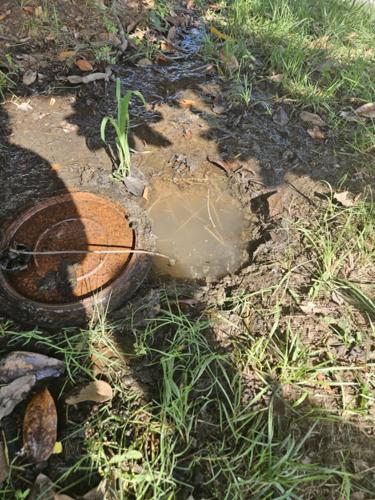
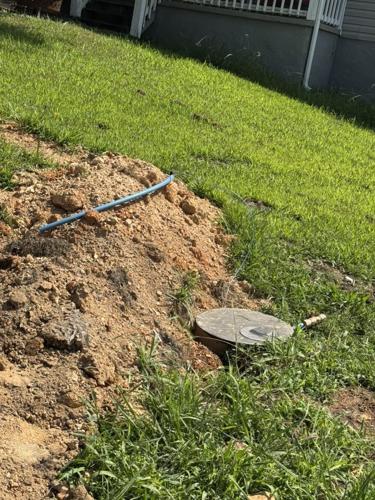
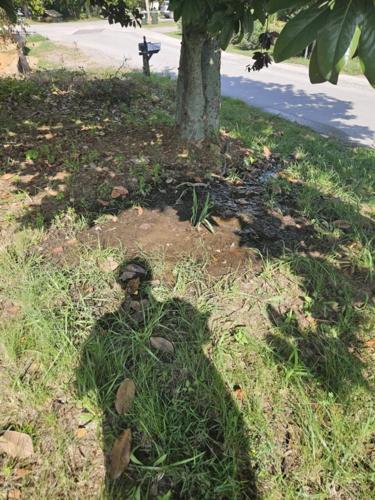
But she recognized that her neighbors may not be so lucky. She said one of the houses behind her was also in the market for a new water heater and garden not long after she had to replace hers. Another set of neighbors had a hole in their yard emitting a foul smell and an uprooted water line.
Yet another resident told The Connection that they had their water shut off multiple times within a week due to ongoing repairs. The first shutoff occurred when workers dug through their line, replacing it with an updated version that didn’t see the resident in question’s house on its route of service.
The second replacement came when the resident went to take a shower, and her line burst completely. Water began to spray out the side of her house, and the cost of damages on that house alone is upwards of $700 just for replacements, not counting the excess in water that may be tacked onto the water bill at the end of the month.
Off the top of her head, Suerth could name at least six other households that have had similar issues with pipes, drainage running into their yards and gardens, sky-high water bills due to leaks — or some combination of the three.
One neighbor reportedly received a monthly water bill of $700 as a result of the damage, with more tickets of this kind expected during the next slew of bills. She also said the problem has extended past a utility issue, and now is becoming an aesthetic concern for residents as well.
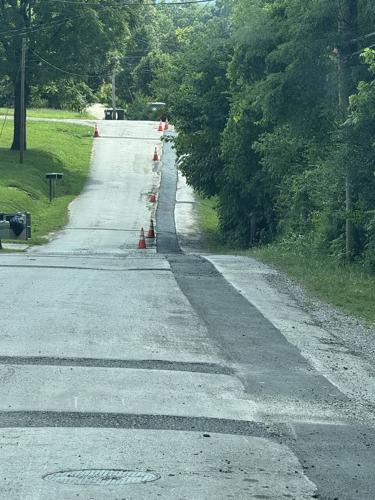
One of the more longstanding concerns that has arisen as a result of this is the patchwork done on the roads in the aftermath. As of a few weeks ago, there were still a number of trenches down Church Avenue where a new water line is being installed to service this new subdivision.
“A lot of people have been complaining because of the roads,” Suerth said. “They’re all messed up, it’s messing up their yards. I had to redo my yard back where they messed it up, I had to fix my own yard.
“It’s turning up in people’s yards and cars, and I’m just over it.”
Initially, the patchwork done on Church Avenue was rocky. Lenoir City Council woman Robin McNabb said when driving through the street days after the first call of complaint, she noticed patched pavement down the middle of the street as well as across the road from side to side where each home branched off into its own driveway.
She said that the asphalt laid down was inches lower than the rest of the road, with a large metal plate as well as other depressions making for a tumultuous driving experience.
A group of residents in the area attempted to speak at a Lenoir City Council meeting in July to address the issue, where Suerth says they were redirected to LCUB by Lenoir City Mayor Tony Aikens. … When interacting with LCUB, the agency told residents whose homes sustained damage to file an appropriate claim.
It is unclear how much notice, if any, was actually given by the utility group ahead of this project. Suerth and a neighbor both stated that LCUB said they acknowledged that older homes would be negatively affected, yet said they never received a notice.
“I went and spoke to [LCUB],” Suerth said. “And I told them this wouldn’t have happened if you had sent a letter. They said they didn’t know if a letter would get to my house. Well, if you send a water bill as a letter, you could’ve sent this as a letter when you built [the new homes].”
According to Council woman McNabb, Shields did acknowledge that no prior notice was given before construction began, instead pointing out that most homeowners in the area had signed construction easements beforehand. Shields then stated that he was under the impression most residents were aware of the potential hazards and damages that could result from construction.
McNabb expressed wishes of more transparency in the future from both City Council and LCUB.
“Ultimately, our responsibility — as City Council and as part of the LCUB board of directors — is to the residents and rate payers, not to developers,” McNabb said.
Mayor Aikens told The Connection that older homes that don’t have pressure-reducing valves attached to them could experience issues with new waterlines being implemented. He also stated that those who came to voice concerns to LCUB were told to turn in a claim, and if negligence was found on LCUB’s behalf that the claim would most likely be fulfilled.
From his understanding, the extent of evidence produced at that specific meeting was an invoice for close to $3,000. No photographic evidence of damage was reported directly to the LCUB at its July 21 session, according to the mayor.
“Its a water line improvement,” Aikens said. “That is not costing the taxpayers or ratepayers any dollars whatsoever. The developer is paying 100% of it, and that’s according to Leon [Shields].”
Wayne Collins, a former Lenoir City mayoral candidate and longtime city resident, was one of the main points of communication for residents looking to take their complaints and file them into the proper channels. In an interview with The Connection, Collins said that stress on old homes may just be the tip of the iceberg for issues with new developments — both here on Church Avenue and beyond.
The water woes have now bled into streets and roads he and his neighbors use on a daily basis.
“If you actually drive down Church Avenue, it still looks like a disaster zone,” Collins said. “I’ve seen Third World countries with roads that look better than that.”
Due to the damage, cones had to be placed on one lane of a two-lane road, impeding traffic on a blind curb that went over hills.
Collins said that initially no sort of traffic signal or sign to alert of a one-lane road was present. The city street department eventually went out to repave the roads once they were made aware of the issue, but not before several residents had reported flat tires due to the uneven pavement.
One of the focal points of Collins’ mayoral campaign was centered around the ever-growing debate of housing in Lenoir City. As Knoxville begins to hit maximum capacity and more residents begin moving into outside counties, it’s an issue that yields potential economic benefit on one hand … and developmental disaster on the other.
To Collins, the priorities of the current administration are frustrating.
“You look at infrastructure and you don’t put the cart before the horse,” Collins said. “Those homes don’t benefit Lenoir City taxpayers at all. The only people that are making money off these homes coming in are the people selling the properties, renting them out, maybe these fast-food restaurants and that’s it.”
When corresponding with The Connection, Lenoir City Council woman Robin McNabb stated that she tried to get discussion and a potential solution to these water line issues added to a Lenoir City Council agenda. Her suggestion, however, was shot down on account of no other Council members requesting the addition.
Lenoir City Council requires at least two members to recommend an issue for it to be considered as an agenda item. She was the only one to endorse the addition.
Mayor Aikens added that in the context of this issue, water line damages fell outside of the purview of the city itself.
“Lenoir City government is not in the water line business,” Aikens said. “It’s an LCUB problem.”
Council woman McNabb also stated that, from her understanding, the water line replacement will continue for some time. She told The Connection that no further discussion on the matter had occurred with the City Council — stating that it felt like a “dead issue” to the rest of the body.
McNabb is under the impression replacement is happening one street at a time, in an attempt to not have too many roadways torn up at once.
“If [residents] experienced a flat tire related to the construction, they can call LCUB and ask for the claims department,” McNabb said. “LCUB has insurance that might provide reimbursement for those types of damages.
“I don’t know if they also would cover expenses for busted water lines and water heaters that broke because of the water pressure, but there’s no harm in calling and reporting the damage.
“If nothing else, this will give us a better idea of how many people were affected by these issues so that we can work harder to prevent them in the future.”
NOTE: Leon Shields, chairman of the Lenoir City Utilities Board, didn’t respond to The Connection’s request for comment before print deadline last week. He did, however, say that there had only been two claims filed on this case as of August 13.
“LCUB continually strives to offer its customers with the best service we are available to provide by updating infrastructure that provides connectibility to our utilities,” Shields said. “In those projects there are always unknown factors that are difficult to avoid but are always evaluated and addressed if found to be a responsibility to LCUB. During the planning and design phases, many times customers ask questions, notice our team on their property, are involved in easement proceedings, see our crews on the roadway and sometime receive a notice via mail as to indicators of the upcoming projects in their areas.”

