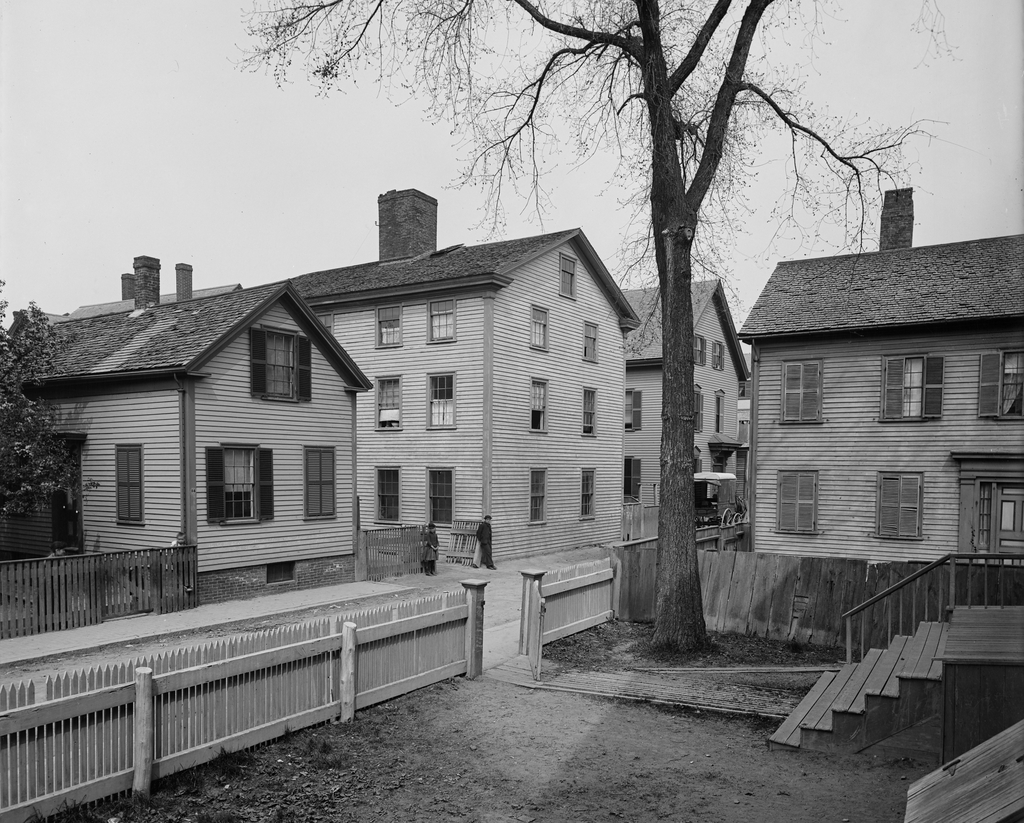


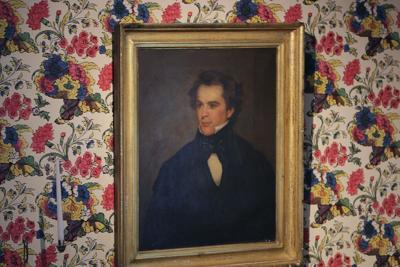
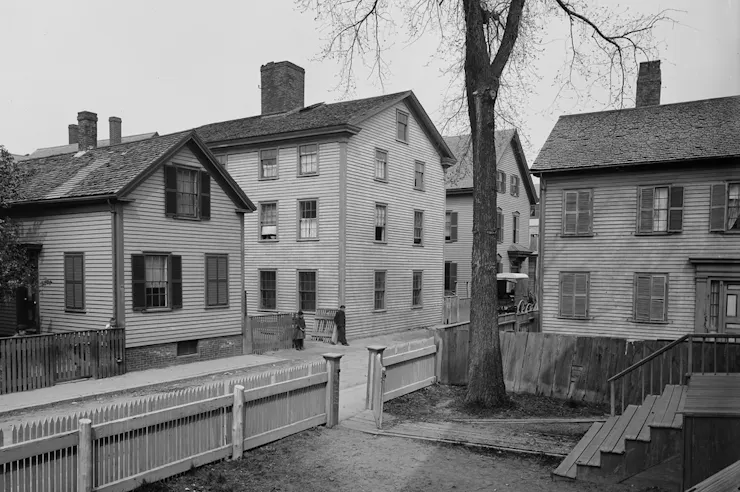
After graduating from Bowdoin College in 1825, 21-year-old Nathaniel Hawthorne returned to his family home in Salem, Massachusetts, to live with his mother and two sisters.
Over the next two decades, the aspiring author took on just two short-term jobs. Otherwise, he spent much of his time as a recluse: reading, taking long walks in Salem, socializing with a small group of friends, and writing stories and sketches from the third-story bedroom of the home he called “Castle Dismal.” During that period and beyond, Hawthorne kept a series of notebooks, which scholars see as an important primary source for understanding the ideas and descriptions that informed his early writings and later novels.
Mainly, however, the notebooks served as a writer’s repository: Hawthorne could let his imagination wander freely without having to worry about being called unconventional, depressive or mad.
For over three decades as a Hawthorne scholar, I’ve used the notebooks – later titled “The American Notebooks” – to help me prepare editions and scholarly monographs. But I’ve long been intrigued by the notebooks’ shortest entries. Often no more than a single paragraph, they make up fewer than 10,000 of the 200,000 words found in “The American Notebooks.” They are weird and captivating, and in their own way seem like what we now call flash fiction or microfiction.
Hawthorne published collections of his tales and sketches in 1837 and 1846, which included such macabre and bleak tales: “Young Goodman Brown,” “The Minister’s Black Veil” and “The Birth-mark.” In 1850, at the age of 46, he published his first novel, “The Scarlet Letter,” which established him as one of the leading American writers of his day.
After Hawthorne’s death in 1864, his wife, Sophia, began transcribing “The American Notebooks” for The Atlantic Monthly. In the process, she grew fond of the fragments, likening them to sketches that bring us “so very near the creative soul of the artist.”
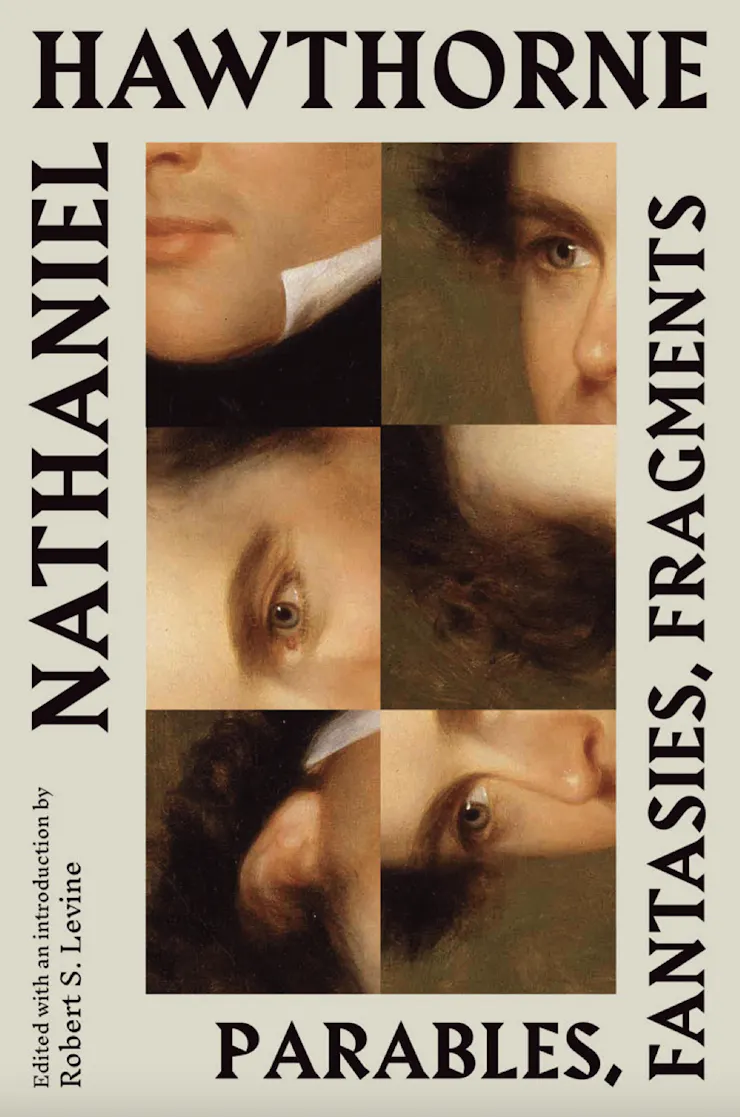
I have collected 200 of the most compelling of these fragments for an edition that was published by the Library of America in October 2026.
Consider the following fragment, which has no relation to anything that Hawthorne actually published:
“To have one event operate in several places – as, for example, if a man’s head were to be cut off in the town, men’s heads to drop off in several other towns.”
Phrased as if for a story that would never be written, this jotting, complete in itself, conjures an eerie world in which violence toward one person reverberates through other people in other places, leaving human bodies mysteriously linked.
In a fragment written in 1836, Hawthorne fantasizes about upending social conventions:
“Would it not be wiser for people to rejoice in all they now sorrow for? – and vice versa. To put on bridal garments at funerals, and mourning at weddings. For their friends to condole with them, when they attained riches or power, as only so much care added &c.”
Hawthorne never wrote a story about women wearing bridal garments at funerals. But the stand-alone fragment, in the seeming spirit of Franz Kafka’s surreal and unsettling fiction, links success to misery, and happiness to death.
That Hawthorne could be regarded as a precursor to Kafka, who wrote posthumously published fragments, was first articulated by the Argentinian modernist Jorge Luis Borges in his 1949 lecture “Nathaniel Hawthorne.” For Borges, Hawthorne prefigured Kafka in his commitment to “pure fantasies that do not look for a justification or moral and that seem to have no other substance than an obscure terror.”
Borges’ assessment seems especially apt for the parables, fantasies and fragments that can be found in Hawthorne’s “American Notebooks,” many of which evoke a hidden menace or unsettling plot:
“A stove possessed by a Devil.”
“Follow out the fantasy of a person’s taking his life by installments, instead of at one payment – say ten years of life alternately with ten years of suspended animation.”
“Little gnomes dwelling in hollow teeth; they find a tooth that has been plugged with gold, and it serves them as a gold mine.”
In a longer fragment, written in 1853, Hawthorne anticipates the many horror films featuring a demonic or possessed child:
“A family, consisting of a father, mother, and two children, are out for a walk, and sitting together in a wood. The little girl rambles away into the wood – they call for her – within a brief time, she comes back. At first, they notice no difference in her; but by degrees, they begin to see something odd – they notice more and more, till, in the course of years, they almost suspect that it was not their own child, but a strange child, who came back.”
Hawthorne, who had two daughters and a son, captures how children can seem to their parents like mysterious little people beyond their control. He would explore this dynamic in Pearl, the willful child in “The Scarlet Letter.” At one point, Pearl’s mother, Hester Prynne, wonders whether she’s a “demon offspring.”
Hawthorne’s notebook fragments are wide-ranging, but certain themes repeatedly crop up: the psychology of divided selves, tensions between men and women and even possibilities for a better world. As he hopefully imagines in a stand-alone fragment: “Cannon transformed to church-bells.”
Who was Hawthorne the writer? A neo-Puritan moralist? A social realist? A modernist? A romancer? The fragments complicate rather than answer such questions. In his preface to “The Scarlet Letter,” Hawthorne remarks on his desire to “keep the inmost Me behind its veil.”
But with the help of the fragments, we get behind the veil, at least a bit – and glimpse something like what Sophia believed was the spirit informing Hawthorne’s writing.
This article is republished from The Conversation, a nonprofit, independent news organization bringing you facts and trustworthy analysis to help you make sense of our complex world. It was written by: Robert S. Levine, University of Maryland
Read more:
- An 83‑year‑old short story by Borges portends a bleak future for the internet
- Cormac McCarthy’s fearless approach to writing
- Anne Carson’s Nobel‑winning, genre‑defying work bridges the gap between ancient Greek literature and modern life
Robert S. Levine does not work for, consult, own shares in or receive funding from any company or organization that would benefit from this article, and has disclosed no relevant affiliations beyond their academic appointment.