


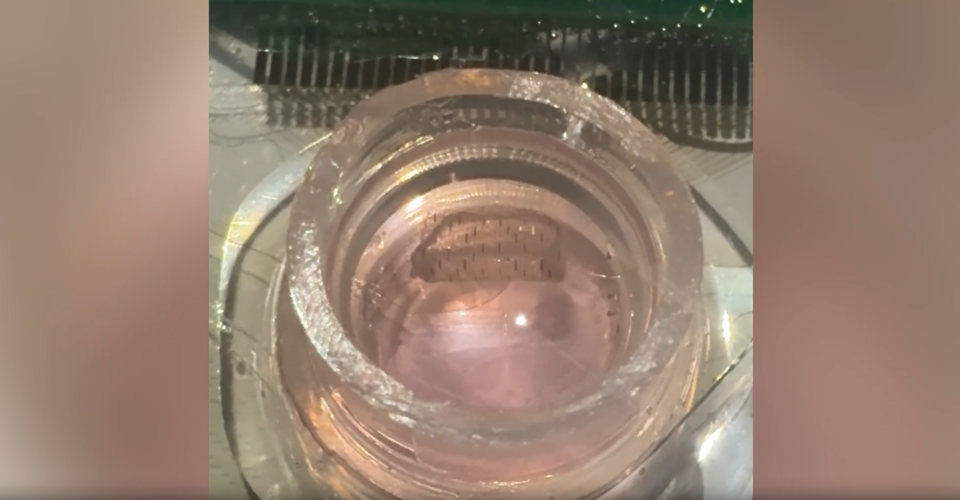

(University of Massachusetts Amherst / Science Advances via SWNS)
By Stephen Beech
Terminator-style cyborgs are a major step closer after scientists successfully integrated electronics with human cells.
They say their revolutionary "biohybrid mesh harvester" could replace batteries for wearable and implantable electronics.
Engineers in the United States designed the ultrathin, flexible mesh that seamlessly integrates electronics with human cells to provide a continuous, reliable, powerful electrical supply.
They say their findings, published in the journal Science Advances, provide a potential solution for getting rid of batteries in wearable and implantable electronics.
Senior author Jun Yao, from the University of Massachusetts Amherst, said: "Humans have long dreamed of a future where certain electronics can augment our abilities."
Aside from science fiction, real-life examples include pacemakers and implantable defibrillators, deep brain stimulators, cochlear implants and various health monitors.
But every one of those needs a power source.
Batteries, the dominant power source, are bulky and eventually run out of juice, while making them smaller and more flexible reduces the charge they can store.

“Our bodies are 24/7 power plants,” says Siqi Wang. “Every single cell produces its own power.” (Siqi Wang via SWNS)
But study lead author Siqi Wang, a Ph.D. student, said: "Our bodies are 24/7 power plants.
"Every single cell produces its own power."
Yao, who has previously demonstrated a mesh that can grow with and monitor heart tissue, built an artificial neuron that can communicate directly with human cells and discovered how to harvest clean energy from thin air.
He explained that everything battery powered relies on a centralized supply of energy, but that's not how the body works.
Instead, each cell in a human body is its own "power plant" — and the power is distributed throughout the entire system.
Yao said: "We wanted to shift this traditional, centralized paradigm to something more distributed and modeled on biology."
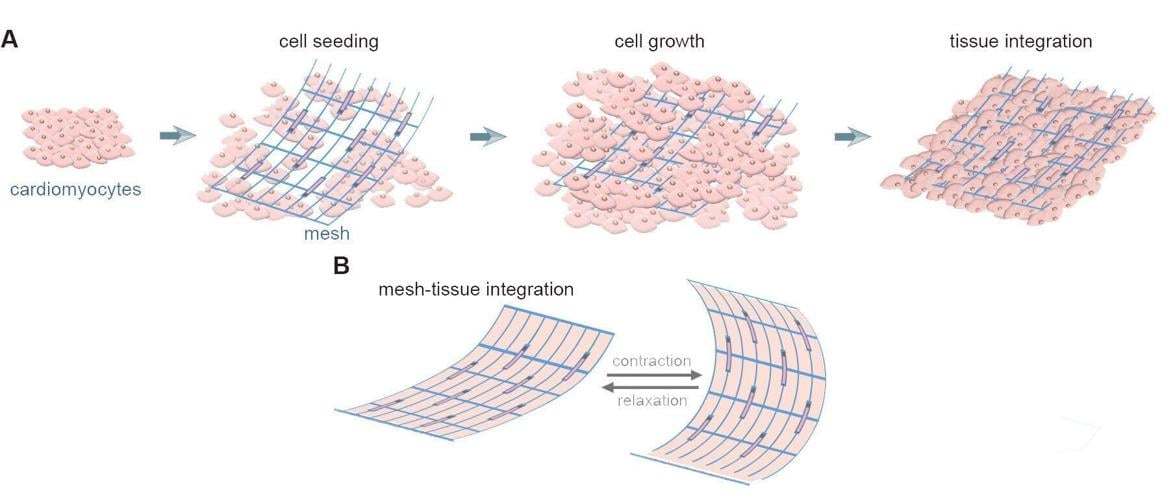
The research team began with an array of thin ribbons of lead zirconate titanate (PZT), which converts mechanical energy into electrical energy.
They then devised a technique for putting them on an ultrathin, ultraflexible polymer platform.

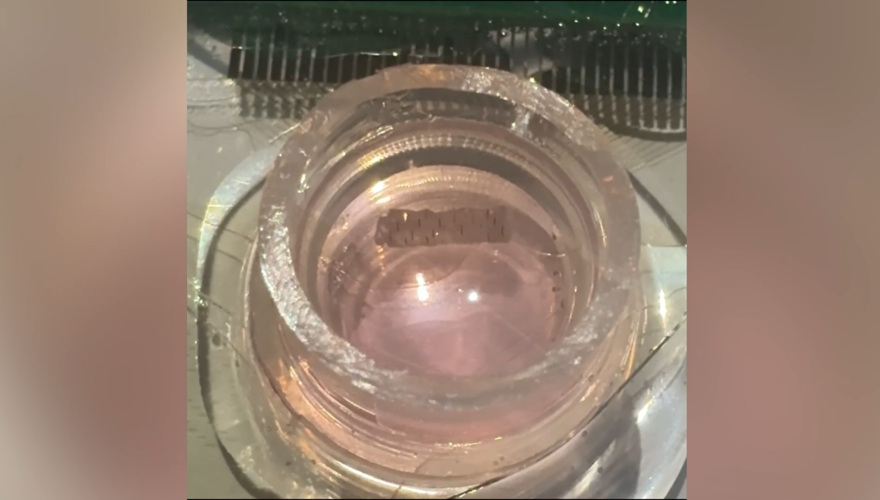
(University of Massachusetts Amherst / Science Advances via SWNS)
Next, the team seeded the new platform with human cardiac cells which, as they grew, meshed seamlessly into and around the PZT-loaded platform.
The result was a device that moves and looks like human tissue, but works like a battery that never needs to be replaced.
Yao, who pointed out that their research so far exists only in the lab, says that the device generated 10 times more power density — or the amount of energy that can be produced in a given volume — than those systems that rely on a centralized power source.
And he says that's just the start as the films are ultrathin, so they can be stacked in layers — drastically increasing the amount of power on tap while remaining noninvasive.
Yao added: "The beauty of this system is how non-invasive and powerful it is.
"Our bodies want to reject systems that come with bulk batteries, but when the device exists at the cellular level, you get vastly improved biocompatibility."

