


More than 11.5 million people visited Great Smoky Mountains National Park in 2025, keeping it America’s most visited national park, according to park statistics. Yet just outside the park, Townsend, Tennessee, offers a striking contrast to the crowds. The small gateway town has built its tourism identity as the peaceful side of the Smokies, making it a natural fit for the rising slow travel movement.
Slow travel gains momentum
The slow travel movement has roots in the slow food movement, founded in Italy in 1986 by Carlo Petrini. Slow food emphasizes local businesses as well as the traditional food culture of an area. Slow travel applies the same principles to tourism, and the movement is growing.
Search interest in slow travel hit a record high in 2026, according to Google. Travelers who follow this approach may spend more time in one destination instead of making many short stops in different places. They also leave room for discovery instead of packing their itineraries.
Other characteristics of slow travel include spending time in nature, skipping overcrowded destinations in favor of overlooked places, prioritizing local food and crafts and learning more about local culture. The goal is quality over quantity.
National Parks are an obvious fit for the slow travel movement, but incorporating its principles may require looking outside the most commonly visited areas. Booking.com says 43% of travelers plan to avoid overcrowded destinations this year, up 11% year over year, so interest in finding the unheralded destinations is there. Even with the highest visitor count among national parks in the United States, the Great Smoky Mountains National Park still offers ways to avoid the crowds.
The peaceful side of the Smokies
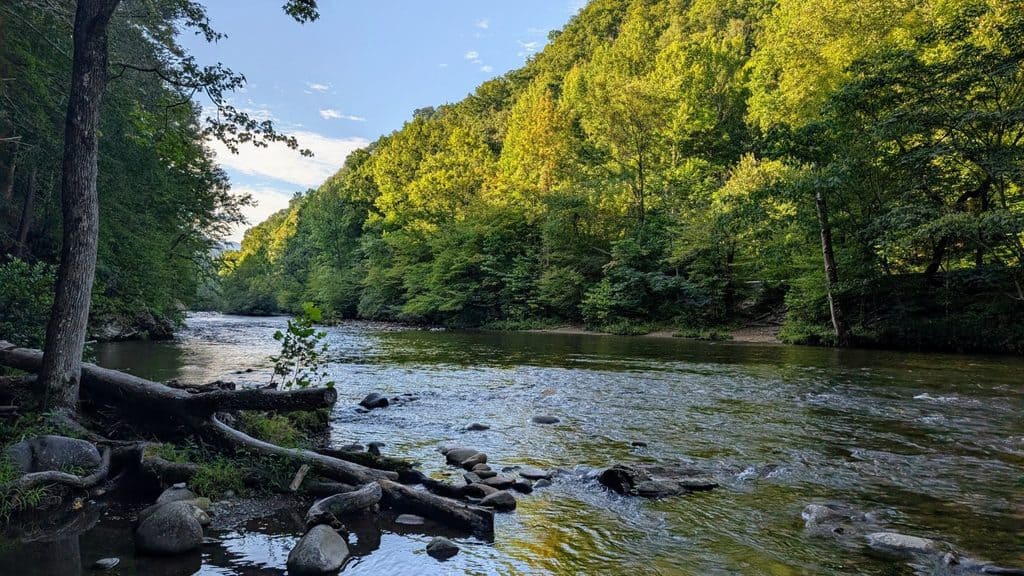
While nearby Gatlinburg and Pigeon Forge have amusement parks and outlet malls, Townsend markets itself as the peaceful side of the Smokies. With a population of less than 1,000 and no roller coasters in sight, the town offers a different kind of vacation. Tourists can spend their time hiking in the park, biking to a local restaurant or tubing down the Little River that flows through town.
Townsend has few chain hotels. Rental cabins and small, locally owned hotels or campgrounds make up most lodging choices. Family-run Little Arrow Outdoor Resort offers RV sites, glamping tents and tiny homes located along the Little River. CEO Carmen Simpher agrees that Townsend offers something different. “We love that Gatlinburg and Pigeon Forge offer a little ‘Vegas-style’ excitement not far away, but at Little Arrow, we embrace slow travel- a place where guests can relax, feel at home, build friendships, and become part of a welcoming community. It’s the perfect balance of adventure and peaceful mountain stay.”
To incorporate the slow travel principles of nature and community, the resort has expanded river access, added hiking trails and created a communal fire pit. It also works with a local woodcarver whose creations include Bigfoot Burt, a 40-foot-long carving at an overlook along one of the property’s hiking trails.
Slow travel meets slow food
Locally owned restaurants are another part of Townsend’s appeal. The town has just one national chain restaurant, leaving plenty of room for independent businesses. Some, like Burger Master, have a nostalgic connection for repeat visitors. It has been serving burgers and soft-serve ice cream from its walk-up windows since 1967 and still has its original sign over the building.
While Dancing Bear Appalachian Bistro is a newer addition, it anchors itself in the region’s history by specializing in Appalachian cuisine, a style of cooking known for melding immigrant and Native American traditions as well as practical use of what’s on hand. Houston Oldham, vice president of operations, says, “We offer a Modern Appalachian Menu that features the cooking techniques and skills learned from our ancestors.” He finds guests are interested in connecting with the area and especially in learning the techniques of food preservation.
Oldham says the restaurant previously worked directly with the Slow Food movement and continues to follow its principles. “Most people understand the term locally sourced more than slow food. You’ll see Dancing Bear promoting our local farmers, ethically sourced, local meats and our regional wine program that all embody the ethos behind slow food. Within 60 miles, we source a large portion of our trout, vegetables and specialty items. Within 200 miles, we source the vast majority of our inputs.”
Connecting with Appalachian culture
The Great Smoky Mountains Heritage Center traces the region’s history with its exhibits while preserving Appalachian culture through concerts, workshops and heritage tours. Small festivals like the spring Fiber Fair showcase traditional fiber arts such as spinning, weaving and sheep shearing. Classes and demonstrations help pass these traditions on.
The free Little River Railroad and Lumber Company Museum tells the story of the logging industry that helped shape Townsend and the surrounding mountains. Tens of thousands of acres that became Great Smoky Mountains National Park were purchased from the company after it was logged, and several locations in the park still bear names the loggers gave. A preserved steam engine draws young visitors, while historic photographs and volunteers illustrate the industry’s impact on the Smokies.
Rocky Branch Mountain Music, just outside Townsend, hosts a Friday night jam session open to anyone with an acoustic instrument and an interest in traditional Appalachian music. The goal is to preserve the area’s musical heritage, and donations are encouraged.
Explore Townsend at a slower pace
The slowest way to explore Townsend is to float down the Little River on a tube. It is a time-honored tradition for locals and tourists alike. Several outfitters shuttle tubers to the edge of the national park to start their scenic float back to town. One of the locations of Smoky Mountain River Rat Tubing is next door to Burger Master, so tubers can walk over for a burger and a shake after their day on the water.
The Townsend Historical Trail is a 10-mile walking and biking trail that loops through town, running on both sides of the main road. The town has two bike rental shops, including for e-bikes. A local artist painted wildlife murals that decorate pedestrian tunnels along the trail. Cyclists can enjoy the art, stop to see the historic steam engine at the Little River Railroad and Lumber Company Museum and continue to a locally owned restaurant for dinner.
Slow travel matters
For travelers, slow travel is not only about increasing the connection with the destination but also spending more quality time together. For communities, it can distribute visitors beyond overcrowded destinations while encouraging longer stays and spending at locally owned businesses. For places like Townsend, slow travel offers a way to welcome visitors without losing the character that brought them there in the first place.
Amanda Luhn is a freelance writer who escapes from her never-ending cabin renovation by heading off into the woods or hopping on a plane to a new country. Her work is syndicated through the Associated Press Wire and has appeared in major outlets like the Seattle Times and Boston Herald. She also writes for her family travel blog, Simply Awesome Trips, and her East Tennessee blog, Knoxville Backyard & Beyond.
The post Townsend, Tennessee, brings slow travel trend to America’s most visited national park appeared first on Food Drink Life.


