


Tucson holds UNESCO’s Creative City of Gastronomy title, awarded in 2015, and the designation leaves a first-time visitor with a practical problem. The city’s dining ranges from counter-service pizza and a casual food hall to a 10-course tasting menu with wine or nonalcoholic pairings, but the title says nothing about where to start. Tucson earned the designation for a reason that goes beyond good restaurants and anything printed on a menu; you just have to know where to begin.
The story begins at Mission Garden, a living agricultural museum at the foot of Sentinel Peak. The garden sits on the site of Cuk Ṣon, a village sacred to the Tohono O’odham, and grows heritage fruit trees, heirloom crops and edible native plants. Each plot is tied to a group that farmed the Tucson Basin, including the Hohokam and the O’odham, and visitors can wander or book a docent-led tour.
Archaeologists have documented 4,100 years of continuous cultivation at the site. When UNESCO named Tucson a Creative City of Gastronomy, Tucson Weekly reported that the city became the first in the United States to receive the designation and that its application drew on roughly four millennia of continuous agriculture, native seed preservation programs and the impact of food jobs and businesses on the local economy.
Food tours are the best way to eat the city
A food tour answers the first-time visitor’s question: where to start. Tucson Food Tours, locally owned since 2012, runs walking tours with six or seven restaurant stops on most routes. The Sonoran hot dog is a must-try. It’s a bacon-wrapped, all-beef dog served in a warm bolillo with pinto beans, tomatoes, onions and jalapeno salsa. It became popular in Hermosillo, Sonora, in the 1980s before reaching Tucson restaurants and street carts.
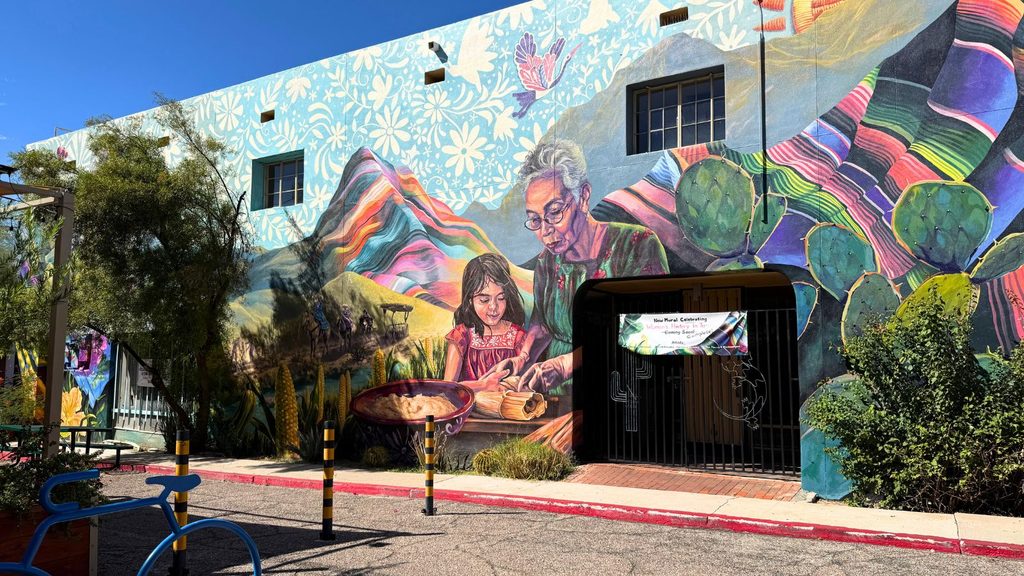
Local guides are the best way to pick up insider food knowledge, and Chris, who has led Tucson food tours for 10 years, shows why. His passion for the city’s flavors is evident, and he knows all the best spots. He’s free with his tips and loves talking about the colorful murals that turn this desert city into a vibrant attraction.
Ursa treats the desert as the main ingredient
Ursa opened downtown in October 2025, founded by chef Aaron Lopez, whose family moved from Matapé, Sonora, to Arizona. The tasting menu draws on indigenous ingredients from the Sonoran, Mojave, Great Basin and Chihuahuan deserts. The restaurant’s own site pushes back on the idea of an empty desert: “The Sonoran desert is often mistaken for empty land.”
The printed menu names each course for a single ingredient, then lists what surrounds it, and three courses stood out. The criollo course pairs sweet 60-day corn, amaranth kimchi and canyon grape with paper-thin, intensely beefy aged beef served on a basalt rock. The goat course pairs tender braised goat with white tepary beans, agave water aged in clay and goat milk cotija. Alternatively, the tepary bean course dresses the desert legume with chorizo, saltbush furikake and tomato leaf kosho.
Diners can pair the tasting with wine, either local bottles or ones chosen to fit the kitchen’s environmental values, or with a nonalcoholic pairing, which this meal followed. The standout drink was the opuntia rosé, a bright prickly pear pairing with the cactus course. Ursa is a local favorite and a shoo-in for a Michelin star should the guide ever head to Tucson.
BATA sources within a few hundred miles
BATA fills a large room with exposed brick walls, and bar seating looks over the open kitchen. The kitchen sources from within a few hundred miles. It has an urban vibe, but servers like Christian really know the dishes.
You have options at BATA. The four-course Trust Us menu gives the chef the final say. You might be served grilled malawach flatbread with labneh and chili jam, a flavor-packed favorite; Vera Earl Ranch steak in a layered sauce; or yellowtail crudo with leche de tigre and pickled melon. Dessert, like the regular menu, changes often. The smoked corn and onion gelato leek honeycomb was savory and delicious, but the real surprise was the fermented tomato and melon sorbet.
Or, order a la carte, but go hungry because the flavors, with a kiss of fire in nearly every dish, are amazing. BATA is another local favorite and another Michelin-star candidate, should Michelin head to Tucson.
Breakfast, pizza and a ‘Top Chef’ finale
Many more small spots are worth trying. The historic Coronet Café, attached to the Coronet restaurant, has a shaded patio and outdoor seating. It’s a popular breakfast spot with a unique menu, perfect for brunch. Locally owned Anello in the Warehouse Arts District makes naturally leavened pizzas and rotates its salad and vegetable dishes with seasonal ingredients.
Downtown, The Monica serves carne seca pizza in a big, lively space with counter service and a large full bar. Look up while you’re walking around downtown, and you might just see carne seca drying on the rooftop. And for die-hard foodies, El Charro Café hosted the quickfire challenge in the Season 19 finale of “Top Chef,” filmed in its courtyard and aired in 2022.
Gardens, a historic grill and a Barrio Viejo lunch
Tohono Chul’s botanical garden is best walked early, when it is cooler, and then stop by Garden Bistro for breakfast. It serves a BLT piled with avocado and crispy, smashed breakfast potatoes on a shaded patio. If you get outside of town, visit Hacienda Del Sol Guest Ranch Resort, which opened in 1929 as a girls’ boarding school and reopened in 1948 as a dude ranch resort. Its grill serves a cold-smoked mesquite ribeye on a seasonal menu, with sunset views over the mountains.
In Barrio Viejo, 5 Points Market & Restaurant sits where five roads converge and was among the area’s first to intentionally source ingredients. Another favorite, Bar Crisol, is an agave-focused neighborhood bar housed in a historic adobe building that was once a home. Owner Doug Smith hand-selects the mezcal of the week, and sal de gusano, the worm salt made from ground agave larvae, chilies and salt, arrives on orange slices. Check out the guided mezcal tastings each Thursday. For a refreshing nonalcoholic drink, Scented Leaf Tea House pours Cactus Candy, a prickly pear iced tea, along with other blends, hot or cold.
Stay in the foothills, eat downtown
Tucson is a terrific city for foodies, and there just isn’t enough time to try it all. Stay at Hacienda Del Sol Guest Ranch Resort in the foothills, then head downtown to explore all it has to offer. From casual food halls to Michelin-worthy eats, flavor is on every corner; just be sure to go hungry.
Jennifer Allen is a retired chef turned traveler, cookbook author and nationally syndicated journalist; she’s also a co-founder of Food Drink Life, where she shares expert travel tips, cruise insights and luxury destination guides. A recognized cruise expert with a deep passion for high-end experiences and off-the-beaten-path destinations, Jennifer explores the world with curiosity, depth and a storyteller’s perspective. Her articles are regularly featured on the Associated Press Wire, The Washington Post, Seattle Times, MSN and more.
The post From ancient farms to chef-driven tasting menus, Tucson proves it is a true food city appeared first on Food Drink Life.


