




(Photo by cottonbro CG studio via Pexels)
By Jack Fifield
A local council has been ridiculed after saying it will use artificial intelligence to detect potholes.
Earlier this week, West Sussex County Council announced a trial of dashboard-mounted cameras in eight highway inspection vehicles, which use AI to identify potholes, cracking, surface deterioration and faded road markings.
The council says highway inspectors currently have to pull over, photograph and manually record information — which can be time-consuming.
It’s hoped the AI system, which has been deployed as part of a “multi-year” trial, will speed up the identification of defects.
However, social media users were less than impressed with the plans.
Writing on Facebook, Chris Woollard said: “Here’s an idea. Just fix them! They aren’t hard to find. They are literally everywhere!”
While commenter Kevin Jewell wrote: “All you need are eyes.”
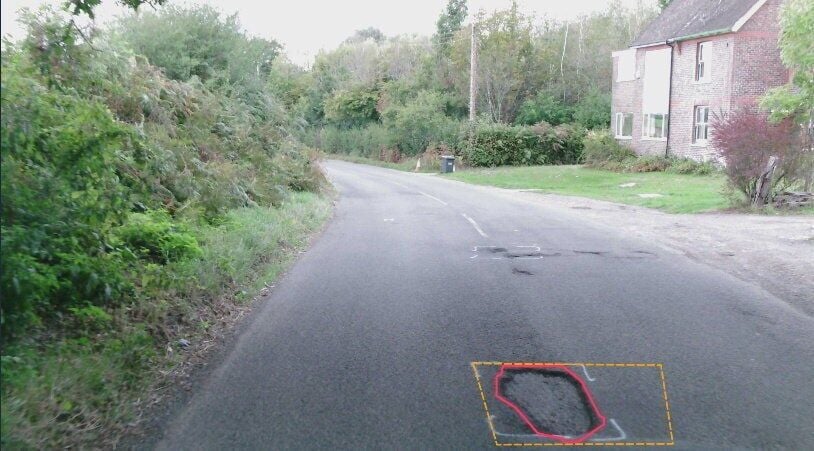
A local council has been ridiculed saying it will use artificial intelligence to detect potholes. (West Sussex County Council via SWNS)
Spenca Holloway wrote: “It’s very easy to know that every road needs repairs.
“You do not need a computer for that one.”
And Kevin Shaw said: “Can they actually trial fixing them properly in the first place?”
Not everyone was negative about the plans, however, with some hoping the trial would lead to potholes being fixed faster.
According to the government’s annual road local road maintenance ratings, West Sussex receives a score of “amber” — meaning its performance on fixing defects is mixed.
Commenter Marc Brunel-Walker wrote: “This is actually very clever tech.
“It means roads can be scanned far quicker, far more effectively and far more efficiently.”
Councillor Erika Woodhurst-Trueman, West Sussex County Council’s cabinet member for transport, said: “Alongside investment in repairs and resurfacing, we’re exploring how new technology could help us work smarter, improve the information we collect and encourage more consistent and informed decision-making across our highways network.
“We’re looking forward to seeing the results and understanding how this innovation could help us continue delivering better roads for residents.”

