


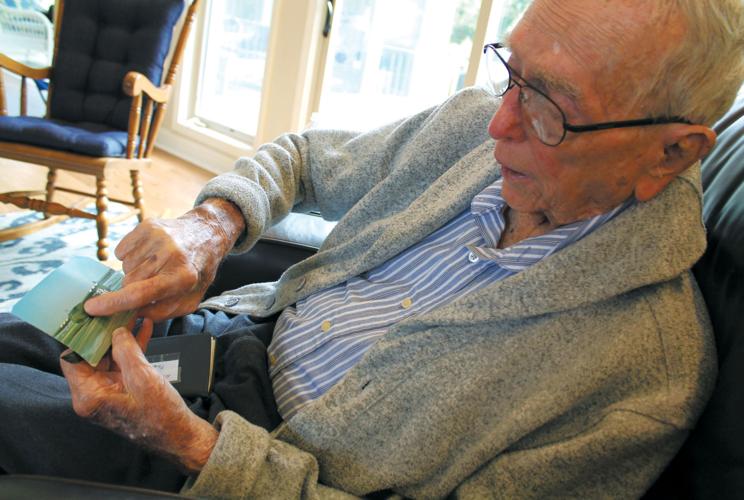
In 2005, retired United States Army 1st Lt. Hilary Herbert Osborn Jr. walked into the Airborne Museum “Hartenstein” in Oosterbeek, Gelderland, Netherlands.
The trip marked Osborn’s first to the Netherlands in more than 60 years, his last as a glider pilot for the United States Army Air Forces during Operation Market Garden in World War II.
“My son works for Phillips, which is a Dutch electronics company,” Osborn, a Nashville native who now lives in Tellico Village, said. “... He had been with Phillips for quite some time. They bought out the company he was with, and his first trip over to the Netherlands after they were bought out, I guess there were four of them from the U.S. Phillips plant. They were talking to the engineers there in Holland, and this one lady engineer was showing them around. This other engineer, an American, said, ‘My father was over here in World War II, but he was very peculiar. He rode to the war in a glider.’ David looked at him and said, ‘Well that’s nothing, my father flew them’.”
An airborne offensive
On Sept. 18, 1944, a thick fog settled over England. Allied troops prepared to launch on the second day of Operation Market Garden, the largest airborne operation of World War II.
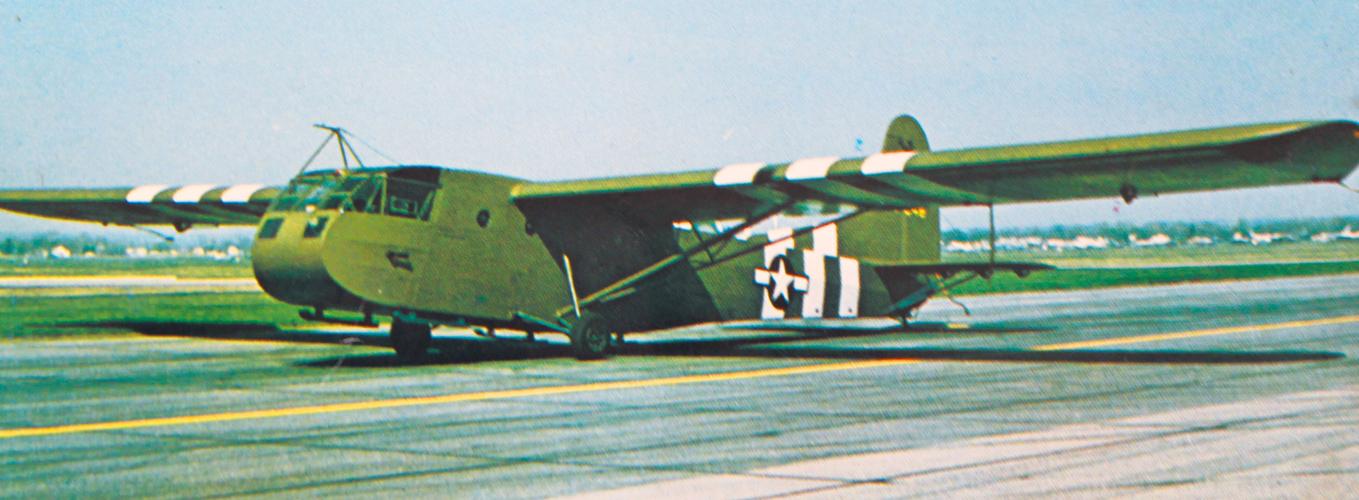
Once the skies began to clear, the 82nd Airborne took to the sky. Osborn flew in behind a tow plane, carrying four men and a Jeep trailer across the North Sea from England to Holland.
“England was all fogged in, so it was 2 o’clock in the afternoon before we got off,” Osborn said. “The fog wasn’t even all gone then. The tow plane got into some fog, and that’s hellish when you’re trying to fly behind a plane that you can’t see. … For about four minutes we were in fog and couldn’t see the tow plane. All of the passengers, they didn’t like that at all. They were ex-paratroopers and they had injured their legs or ankles going in. They wouldn’t let them jump anymore. They weren’t happy in that glider. It’s a different airplane than what they’re used to.”
Because of the size of the airborne operation, Osborn was without a co-pilot. So as he flew he taught a sergeant with him how to operate the glider in case he was shot.
“We got a lot of flack,” Osborn said. “… We were 1,500 feet and they had us gauged. My tow plane took a hit. I saw it go right up underneath and it exploded. It knocked out all of his hydraulics and he started down. I thought, ‘Oh my God. Don’t let us have to get off here in the water.’ But he wheeled his wing and got back up.
“It knocked out all of his hydraulics, and when he got back to the field he had to use the longest runway because he had no flaps,” he added. “Fortunately, the wheels would come down by weight, but they had also a hand deal to lock it. He landed all right, only he couldn’t slow down with no flaps. He used the longest runway at our field and he was still running fairly fast at the end, but he was able to turn off and go to his parking place. I’ll tell you, it’s no fun getting all that flack.”
What Osborn and those traveling with him didn’t know was that the Germans had taken the airfield where they were to land the night before.
“They tried to radio back into England saying don’t come in, the Germans have the landing area,” Osborn said. “That didn’t work, so paratroopers got to work and they were still clearing the area when we landed. It was rather interesting. ... We were in the middle of a combat there. They were trying to get our landing area back, and they did. Before we got out of there they had it all cleared.”
Osborn joined the troops on the ground after landing, putting in time on the front lines when, on Sept. 20, the rest of the 82nd Airborne crossed the Waal River paddling canvas boats with rifles — due to a lack of paddles — in order to capture the north side of a bridge at Nijmegen.
“The British wouldn’t go on because their troops weren’t up,” Osborn said. “All they had were the tanks. Their troops were coming on up later. ... The 82nd said, ‘well, here we are, let’s go.’ (British Field Marshal Bernard) Montgomery said stop. So he stopped overnight. Overnight was too long.
“There were 7,000 in that division (the British 1st Airborne Division),” he added. “Only 1,500 of them got out. The rest of them were killed or captured. He waited one day, one day too long.”
Joining the effort
Osborn joined the Army in June 1942. He had a private pilot’s license and wanted to fly in the war.
He was already registered for service and chose to sign up to make sure he would have the chance to be in the air.
Poor vision in one eye nearly kept him grounded before he was told that the Army was looking for glider pilots and that 20/30 vision in one eye didn’t disqualify him.
“I said, ‘well, what the hell do they want with gliders?’” Osborn said. “I didn’t know. In fact, nobody much knew because this was the early part of the program.”
After joining as a glider pilot, he was sent to Keesler Air Force Base in Biloxi, Miss. The base was still growing at the time and didn’t have a laundry unit, so Osborn was sent down to Hattiesburg, Miss., to retrieve his uniform.
After four days he was finally informed that due to a clerical error, he couldn’t be assigned a uniform because his service record was not sent over. He was given a less than welcome reception when he returned to Biloxi.
“The sergeant looks at me and he says, ‘You’ve been AWOL’,” Osborn said. “I said, ‘No sergeant, I haven’t been AWOL. Somebody forgot to send my service record up.’ Well, he got real mad because I think he was the one that didn’t send it off.”
Osborn was going to dress with the infantrymen and was assigned to peel potatoes as a result, but was instead quickly sent off to start flying in Spencer, Iowa.
“So as a result, I never got any basic training,” Osborn said. “I didn’t know how to march or anything else. I had never been in any military, but I had my license. So I made a point when they had formations to get in the back. Only on Sunday night he says, ‘To the rear march,’ and oh did I foul up the formation. The captain was the head of the military part of the base at the little field there. … The captain says, ‘What’s wrong with you,’ and I told him, ‘well, I’d only been in the service for about a week and I haven’t had any basic training’.”
Because he already had a license to fly, Osborn was told to spend his free time learning to march rather than being sent back to basic.
“We were sent over for the invasion of Sicily, 7,000 of us aboard the U.S.S. West Point, which had been the S.S. America, our big passenger liner that was like the Saint Mary, Normandy and those,” Osborn said. “… We were 11 or 12 days (on the ship), and we did not go by convoy. That ship was fast enough that it went by itself. We went from New York to Casablanca.”
In Casablanca, Morocco, the U.S.S. West Point came in at the only available dock, with sunken French Navy ships obstructing other ports.
“We got off and spent the night in our pup tents, then the next day our squadron, who had flown across, came and picked us up and took us to a field in Algeria ... up near the Mediterranean,” Osborn said. “In fact, we were only about 15 miles from the French Foreign Legion Headquarters in North Africa. Then we were sent over to a field in Tunisia, which is clear across half of North Africa. That’s where we took off for Sicily.”
Osborn never flew in Sicily. He was scheduled to go into Rome, but the Germans beat Allied Troops in.
“They got two tank divisions down through there,” he said. “The other things was there was enough anti-aircraft that they shot all the troop carriers. Fortunately, that little job didn’t happen. We had two or three others that we were alerted but didn’t go in on.”
As a result, Osborn remained grounded until Operation Market Garden, with the tow planes used for paratroopers instead of bringing in gliders.
The end of the war
After leaving the Netherlands following his flight as part of Operation Market Garden, Osborn served out the rest of his time in France. When Germany surrendered, he returned to the United States and planned to join the fight in the Pacific, but Japan surrendered while he was training in Nebraska.
Osborn’s time in the military ended soon thereafter. He was promoted to first lieutenant awaiting his leave to run out before returning to civilian life.
“I went back to school,” Osborn said. “I went to a little school right across the river from St. Louis, over in Illinois. The man that owned the school, it’s called Parks Air College, the man who owned the school gave it to the Catholic University of St. Louis.
“... There were so many ex-servicemen,” he added. “Everybody was looking for jobs or going back to school, that sort of thing. So what. You served. There were 2 million people in the U.S. who served during World War II, and 2 million people is an awful lot, so you’re just one of them.”
After graduating, Osborn spent time working for Eastern Airlines. He later worked for the United States Postal Service, retiring as a postmaster.
“I think when he told me he was a glider pilot I looked at him and said, ‘Are you stark raving mad?’,” Beth Demarest, Osborn’s daughter, said. “They go in, land and then they join the ground troops.”
Demarest didn’t grow up with a great understanding of what her father did in the war.
“I don’t know if I really thought about that much as a kid,” she said. “I think some of the younger people nowadays have a better feeling for that because of what’s going on in the world. We lived in a pretty secure time. The Cuban Missile Crisis is the first thing I remember.
“That generation, they just didn’t talk about it,” Demarest said. “It wasn’t until they started losing all of the World War II vets and The Greatest Generation book came out and all of that, that’s when you went, ‘Oh, that generation.’ They just didn’t talk about it. That’s just the way it was.”
Back to the Netherlands
In the museum in Oosterbeek, Osborn found a map that showed all of the landing sites of the 82nd Airborne, including his.
“They had little airplanes, little gliders,” he said. “I said, ‘Well, good Lord, David, that’s where I landed over here.’ We were right up against the German border and we looked right over the Reicht wall.”
When he was in the museum, a young boy bumped into Osborn.
“He ran on by and we turned around and started talking,” Osborn said. “This lady comes up and says, ‘Did he hit you?’ I was amazed. She spoke perfect English, American-type English. … I said, ‘No, he just brushed me.’ She looked at me, and I had on my glider pilot jacket.”
The woman asked Osborn about his service and he told her he flew in Operation Market Garden.
“She said, ‘I want to tell you something. I wouldn’t be here, my parents wouldn’t have been married and would probably not be here either. It’s just good to see somebody like you’,” Osborn said. “She pointed and poked her finger right at me and said, ‘I want to thank you for what you did.’ I’m standing here. Nobody had ever thanked me for anything. It just got to me. Even when I tell it today I can’t get over that. She was emphatic. She said, ‘What you people did was out of this world.’ The whole time we were there, about four or five days, and every time we went anywhere, when they found out that I had flown in there, they rolled out the red carpet. I couldn’t believe it.
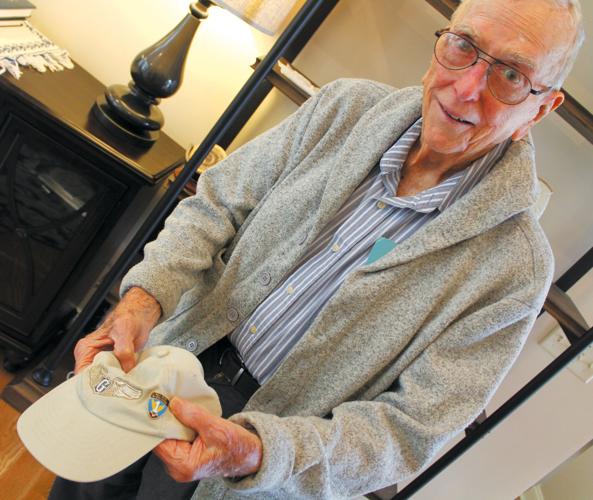
“... She walked away and I just said a very weak, ‘Thank you,’ because I’m not used to that sort of thing,” he added. “Today people will come around, particularly if I have my hat on. Maybe I’ll get another hat that doesn’t have all that stuff on it.”
Thanks is something Osborn still hasn’t gotten used to.
“It gets to me,” he said. “There were 2 million of us that were involved. Some of them — then infantrymen I’ll tell you, they had it rough. I know because we were three days (on the front lines) while the Germans shelled us and all that.”
Osborn joined the Veterans of Foreign Wars post in Tellico Village, the first such organization for him. He is the only member who served in World War II.
“I feel kind of out of place,” he said. “I guess because there’s so few of us left. There’s one power pilot left alive from our group. One enlisted man. I’m the only glider pilot left. The rest of them were older and have gone, have passed on.”
Osborn remembers his time in the war now and then. It was only a short window of his life, after all. He does wonder if years down the road people will remember that gliders flew during World War II since they were replaced with helicopters soon after.
“Occasionally, I think about it,” he said. “I’m 95 years old and I can’t remember some of the stuff, and it’s probably just as well.”


