


Tellico Village residents who frequent Toqua Golf Club have likely taken time to appreciate the work of Park Prater without even realizing.
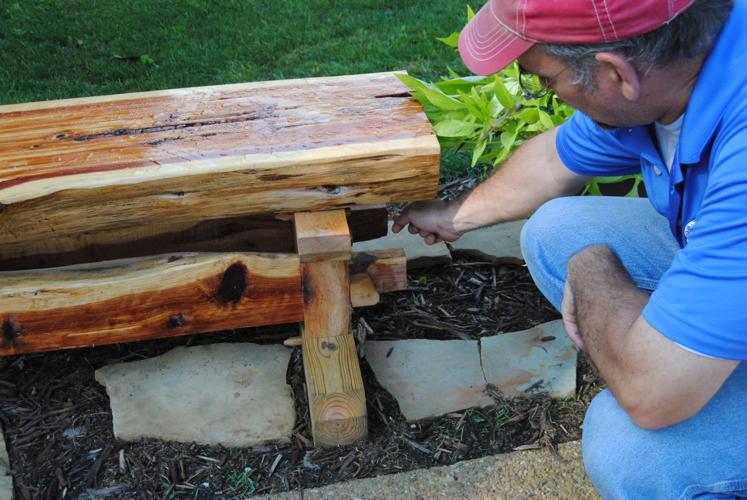
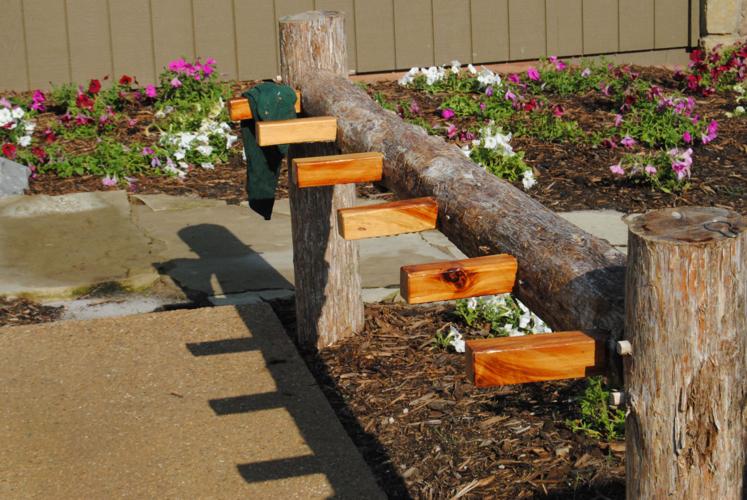
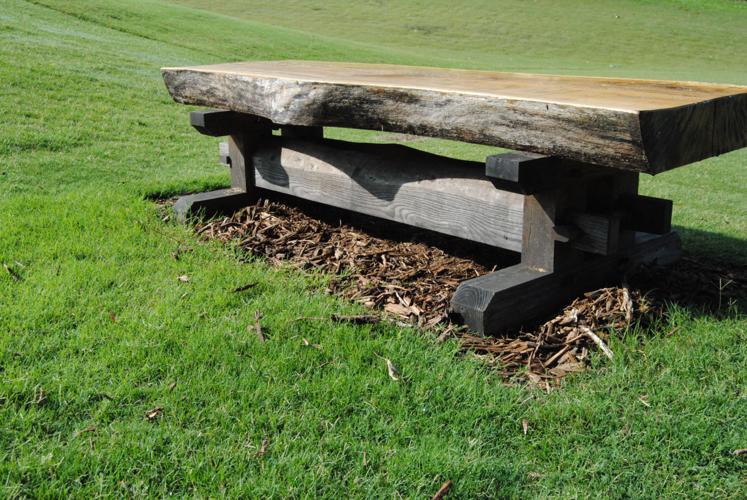
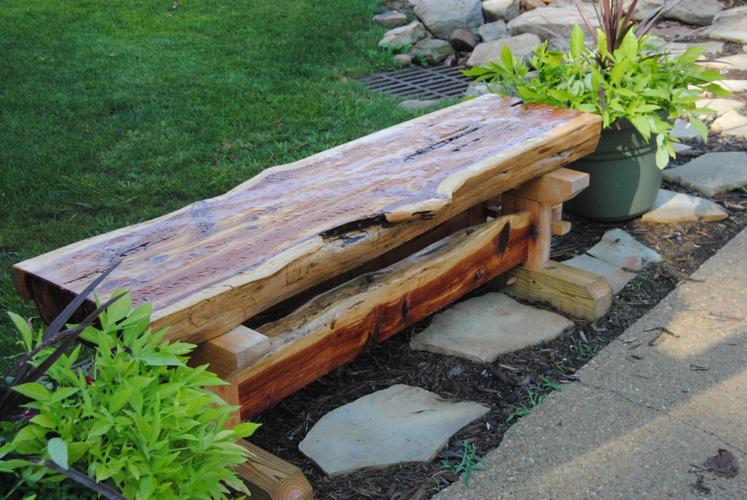
Prater’s work is on display as a bag stand or basket holder at the driving range, or as one of the many benches and hand rails at tee boxes throughout the golf course.
All were built by Prater in recent years from trees removed from the course.
“It just kind of came together,” Prater said of how he began building pieces for the course. “Chris (Sykes), not long after he was here, wanted me to build some benches for the course. He just kind of put it into my lap, so I said, ‘Why don’t we use some of these large trees out here for the wood and I’ll saw it up and come up with something?’ That’s pretty much how it got started. It’s just kind of one of those things that naturally developed because of the stock we had.”
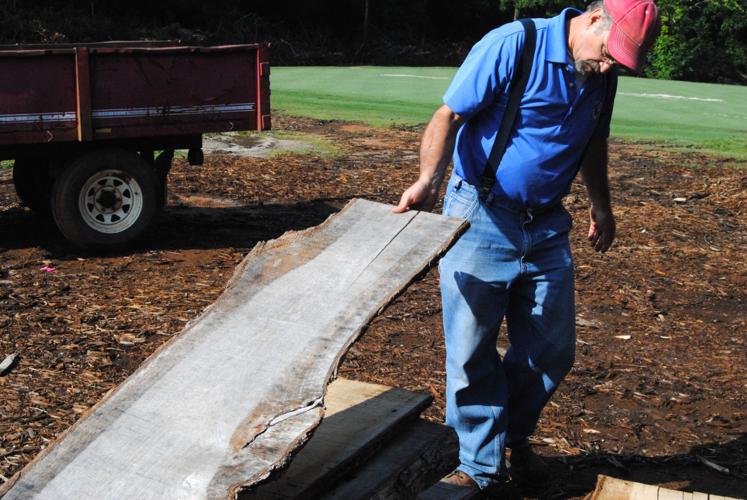
When a tree must be taken down around the course — whether to allow additional sunlight on the greens, it presents a hazard or for a variety of other reasons — Prater puts the wood back into service when possible.
“As a woodworker, and probably any woodworker would tell you they see logs and wood laying around and they immediately think, ‘what can I do with that?’” he said. “Turning it back into something tangible to go back on the golf course gives it a different kind of life. … I’m the kind of person who tries to find the best purpose for the wood.
“It’s rare that I look at pieces of wood and think, that’s no good,” Prater added. “There might be something good in it somewhere. I have a hard time throwing wood out unless it’s just absolutely beyond use. If it is beyond use you can heat your home with it or something else. I really try to utilize what we have and not waste it. Wood is not an infinite resource. It’s finite, or it can be if we don’t manage it. To haphazardly cut things down, I’ve never done that. I don’t like that.”
His journey into woodworking didn’t start at Toqua. Only fairly recently did he begin devoting a lot of time to such projects.
Prater got his start in middle school.
“I started in sixth grade and that was probably 1973, somewhere around there,” he said.
From there Prater, a musician, began to work on guitars, building instruments in the early 1980s. Soon thereafter he developed an interest in timber framing and joined the Timber Framers Guild.
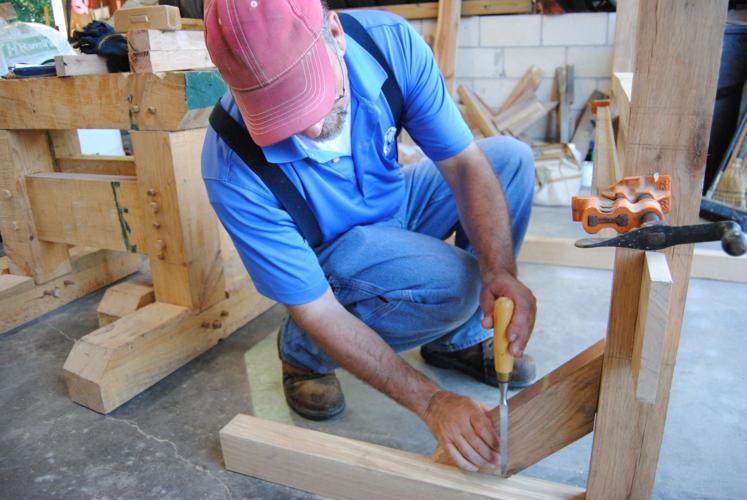
That interest in timber framing is what can be seen around Toqua. The benches, basket holders and bag racks are built entirely out of wood with few exceptions.
Having pieces fully wood and held together only with wood allows greater longevity, Prater said.
“Things become loose, become comprised” as the wood begins to set and shrink, he said. In addition to longevity, Prater simply enjoys building things the way he does.
Having the opportunity to build at Toqua is something he values — in part, because of the control he has over the projects. Prater can cut the wood and shape it how he wants, pick the pieces from his stock he thinks fit the project best and have the freedom to let the project grow naturally.
There’s no definite blueprint to his projects, no strict guidelines to follow based on lumber that must be purchased. At times, the trees that come in are an influence for the way he chooses to build a piece.
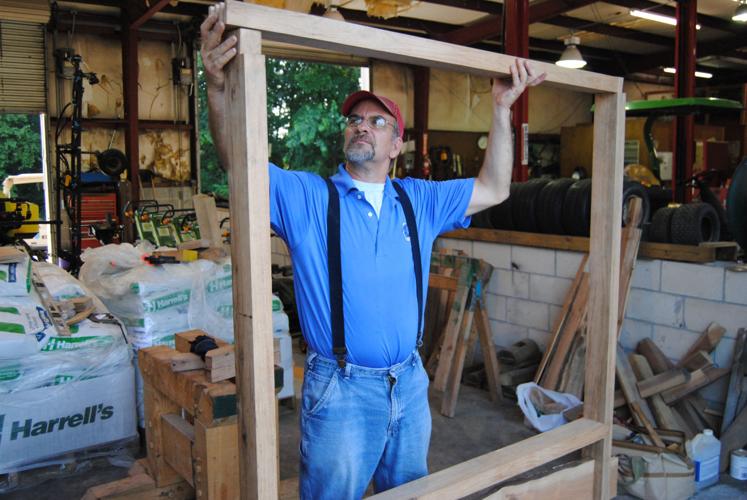
Currently, Prater is working on a scoreboard that will be used at the Toqua Pavilion.
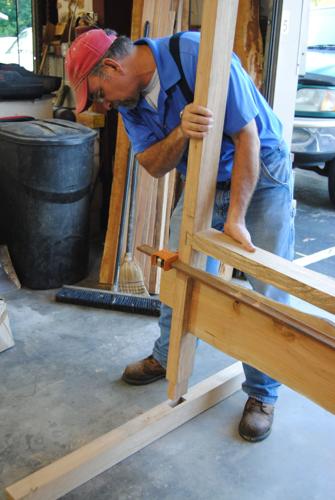
“A lot of this stuff has been sawed for a couple of years now,” he said, gesturing toward pieces of lumber around the maintenance workshop at Toqua. “I just pick through it and find interesting things and I just improvise as I go. Just in my mind’s eye I have an idea of what I want it to look like and then I start loosely mocking it up. I don’t draw anything, I just start building it. I mean I plan for things — I don’t just go at it haphazardly — but it evolves as I build it.
“I really don’t know what I’m going to do finish-wise at the front of the project,” he said. “That evolves as I figure out its purpose. If it’s going to be outside, or as the scoreboard here will be under the pavilion, it will probably get a little more finer finish, something that’s going to be maybe not weather resistant, but it’s going to be a better looking finish than say a bench that goes outside.”
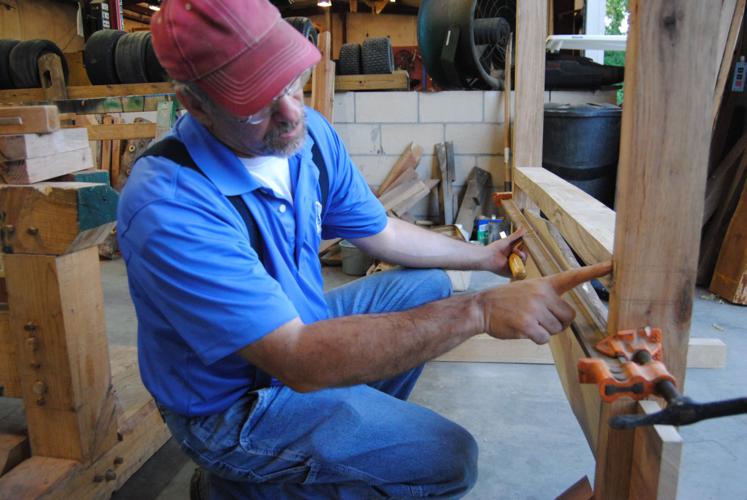
The length of each project varies. Most of the connection work is done by hand with a mortise chisel and mallet. Such small details are time consuming, but important.
“I do my best to really keep the details correct and in line because further on down the road it helps everything when it comes to assembly time and things of that nature,” he said. “There’s really no way of making it work if it’s not all correct. … You can have a lot of hours into something and if you’re not paying attention to what you’re doing then later on down the road it can come back to bite you. Keeping up with the details and making sure of measurements and planning ahead is very important. Otherwise you’re wasting your time.”
Others see the value of Prater’s work in multiple ways.
Jim West, director of golf for Tellico Village, said Prater adds to the look of the course and saves money because the things he builds don’t have to be purchased from outside vendors.
West said he knows Prater’s work is a positive addition because players often ask to buy the pieces.
“Park is incredibly talented,” West said.
Prater’s donations slow down some in the summer with other maintenance work commanding his time. It’s something he can devote more energy to in the fall and winter.
“There’s never been a time in my life when I haven’t done it,” Prater said. “I’ve done things along with it, but I’ve never stopped doing it. I’ve done other things woodworking wise, and this is just a natural extension of what I do, doing it here.”


