


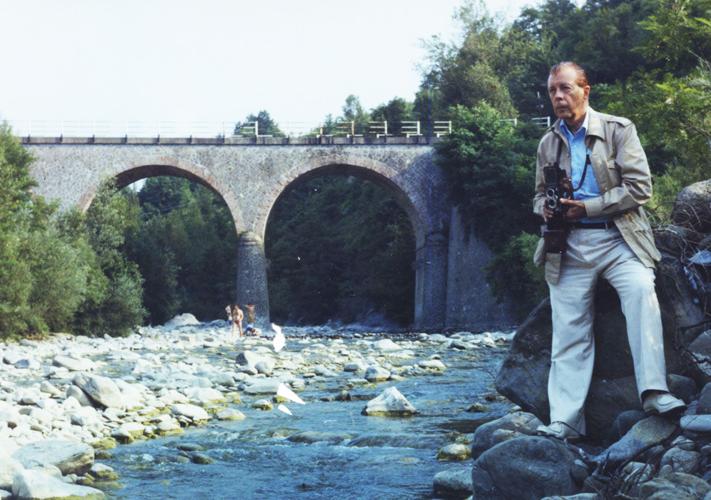
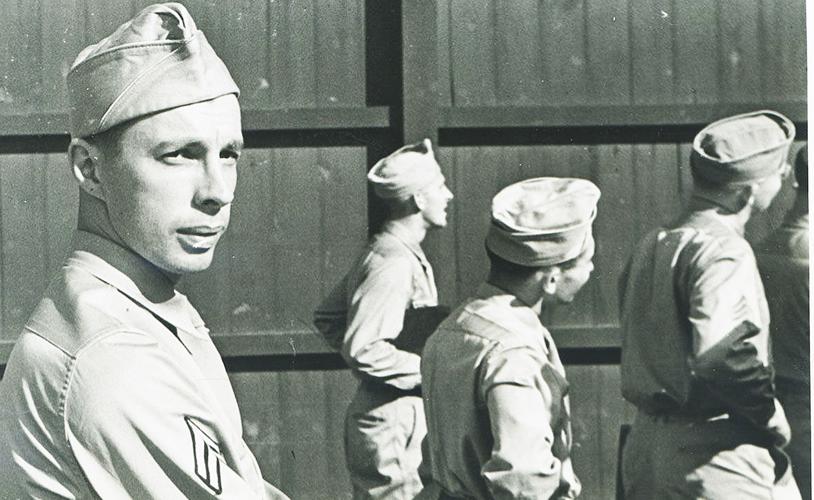
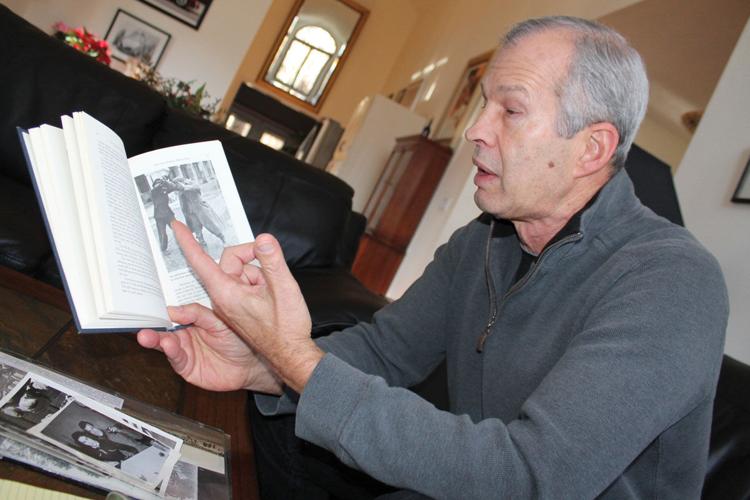
Robert Herbert Schmidt served in the U.S. Army Signal Corps from 1943-46 as a combat photographer during World War II.
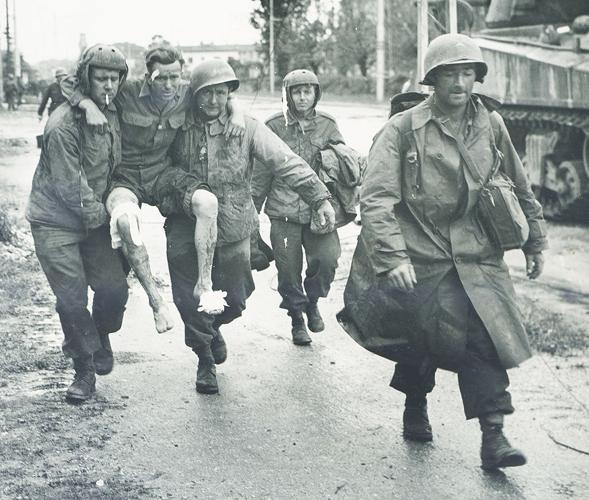
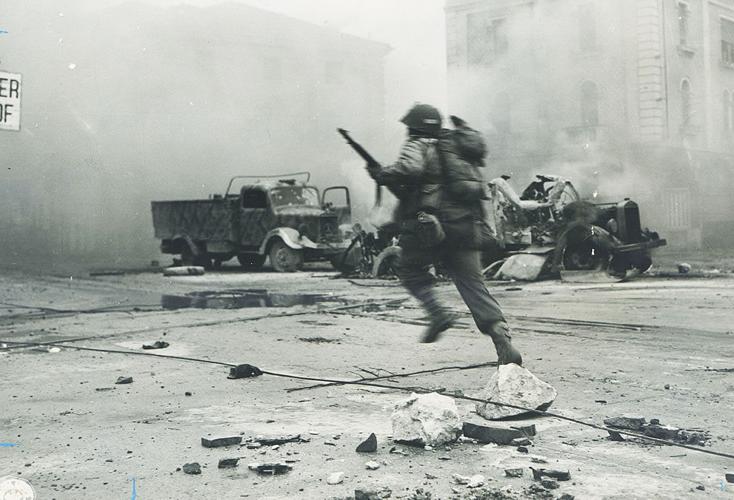
He spent some time in Africa, but his only time in combat was in Italy during the Gothic Line campaign, where he was attached to soldiers in II Corps during the winter of 1944-45 from Florence to Bologna. Later in life, he decided to write of those experiences in a book about the campaign.
But with his death Jan. 16, 1991, Robert Herbert Schmidt was unable to complete his story. His son, Robert John Schmidt, did what was necessary to ensure the fruits of his father’s labor did not go unnoticed.
“It was a brutal campaign, you know, 136,000 American troops were killed during that campaign, double that for the Germans,” Schmidt, a Tellico Village resident, said. “So, and the fighting, the conditions were unbelievable — mountainous terrain, valleys, rivers. They literally had to go forward foot by foot. In the book that he described — and why he wanted to do the book, again, is because this particular war, the Italian campaign, was kind of got overlooked. It was all about Normandy, it was about the battles in the Pacific at the time, invading France, the Normandy invasion.
“A large part of (why) the GIs were in Italy was to keep the Germans in bay away from Normandy to try and suck German divisions out of that area, bring them down into Italy because they knew they were getting ready for the Normandy invasion,” he said. “So that was part of the reason, and part of the reason why it was like a foot-by-foot kind of campaign is that as they got ready for Normandy they started sucking American and British troops out of Italy to get ready for the Normandy invasion. So they were put under extreme conditions just to hold the territory they had gained and then to keep gaining territory. That was probably the worst six months of any war was the Gothic Line campaign.”
Because he felt like the Gothic Line campaign was overlooked, Schmidt said his father began working on a book after his retirement of not only the overall battle in Italy, but also his experiences as a combat photographer documenting the war, including times where he nearly died.
“He was assigned — they wanted to get photographs of a German gun position about 600 yards away,” Schmidt said. “Well, they didn’t have telephoto lenses back then. So he got this camera from I don’t know where, but it was this huge camera that they used at baseball games in America. ... So he had one of these cameras that weighed 40 pounds, it’s 4 feet long, and he drug it up the 90-foot of steps into this church steeple ... to take some long-range photos.
“While he was up there getting it ready to take the pictures, he thinks that there must have been a reflection off the lens that the Germans saw and they started lobbing shells into the steeple of the church and it ended up blowing off the roof,” he added. “Well, after that happened they grabbed that camera and got out as quick as they could.”
Unlike some veterans, Schmidt said his father never shied away from telling people his war experiences.
“The troops were moving, his unit was pulling out, and two other Signal Corps photographers were sent in to replace them and stay in the house that they were staying in because my dad and his group was moving out the next location,” Schmidt said. “Within 24 hours after they left a shell hit that house and killed both of those photographers. So, if he had been there, if he hadn’t pulled out, it would have been him. ... A lot of times he’d crawl in during the night to certain areas with his camera, have to wait until day, take positions of the Germans, and then he’d crawl out the next night. He did stuff like that as well as documenting regular photos of the war of what was going on.”
Schmidt’s father spent 2 1/2 years before his death doing historical research at the Library of Congress in Washington, D.C., and in Italy during yearly trips with wife, Zelia, whom he met while serving in the military. Schmidt said his father lived long enough to complete the first draft of the manuscript.
“He probably sent it out to different publishers, but I guess McFarland & Co., they kind of specialize in history so when they got it they said, ‘Oh yeah, pretty cool. We’ll do it. So yeah, we’ll publish your book but you need to do the final draft and add some more pictures,’ and shortly after he died,” Schmidt said. “It was at that point that I said, ‘He’s put way too much work into this.’ This is like one of his big deals that he wanted to do.”
Having the first draft already complete, Schmidt mainly tidied up his father’s writing and included more photographs. All photographs were taken by his father. The process took 2 1/2 years before “The Forgotten Front in Northern Italy: A World War II Combat Photographer’s Illustrated Memoir of the Gothic Line Campaign” was published in 1994.
“I tried to make it so anybody could pick it up and read it and it would have a nice flow to it, (and I ensured) it would be understandable,” Schmidt said. “Tried to modernize the language a little bit rather than his era. I tried to bring up to (modern days), just so it would read easy.”
The idea behind tweaking some of the language was so readers could understand what was going on in the book, he said.
“I thought that was the coolest thing that could have ever been done,” Lyn Cokeley, Schmidt’s wife, said on Schmidt completing his father’s book.
Although not a history buff herself, Cokeley said she found the book intriguing when she read it years ago.
“There are parts of it of like troop activities, but I’m not into war so it wasn’t as interesting as it would have been to a history buff,” Cokeley said. “But I thought the book was well written and very interesting. I don’t know a whole lot about the second World War, but I enjoyed (the book).”


