




Heart disease is the leading cause of death for women in the U.S., yet most doctors wait until cholesterol reaches dangerous levels to treat it. That can mean missing the silent cardiovascular shifts that begin years earlier — often during perimenopause.
As Hone Health explains below, that’s why perimenopause is increasingly viewed as a critical “window of opportunity” to protect heart health. A 2026 analysis in the Journal of the American Heart Association found that perimenopausal women were twice as likely to have lower measures of cardiovascular health as women with regular menstrual cycles.
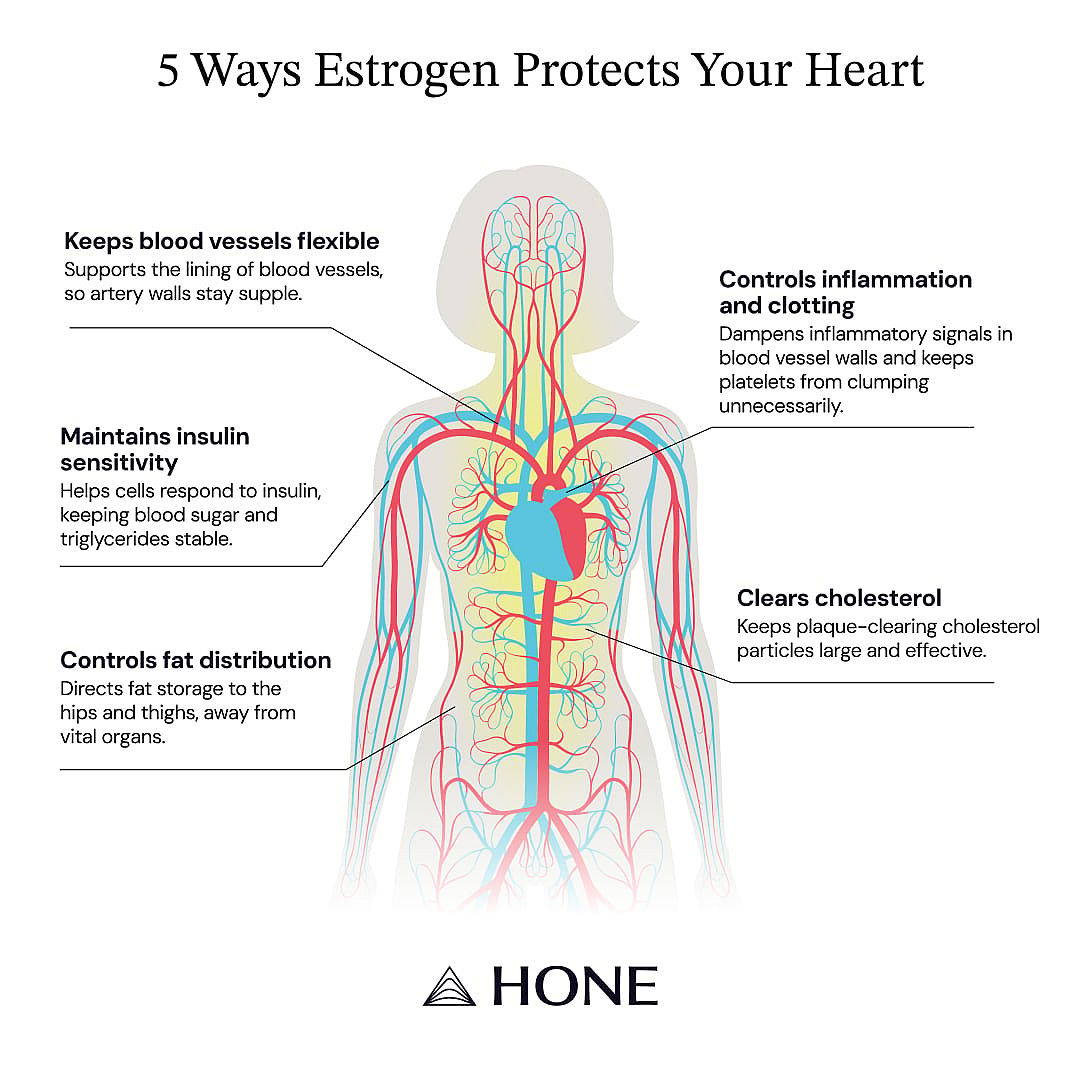
Before menopause, estrogen clears cholesterol from the blood, keeps blood vessels healthy, maintains insulin sensitivity, and regulates inflammation — all of which support heart health. When estrogen levels fluctuate in perimenopause and then plummet after menopause, those protections erode, even as a basic cholesterol panel continues to stay within a normal range.
How Declining Estrogen Affects the Heart
Estrogen protects the heart across multiple pathways, which is what makes its loss during menopause so destabilizing.
Cholesterol and blood vessels
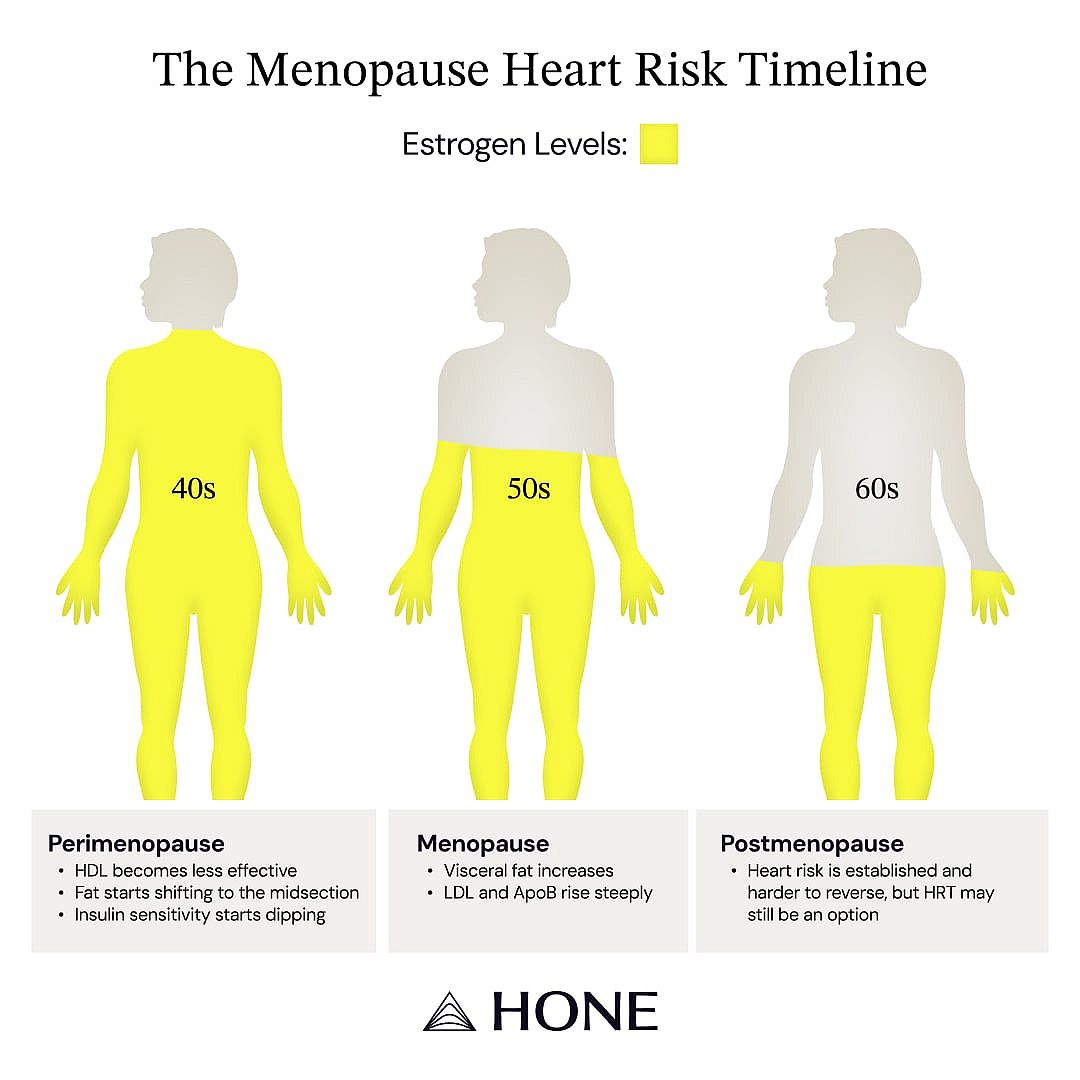
HDL cholesterol (the “good” kind) carries excess cholesterol to the liver for disposal. Estradiol, the main form of estrogen, helps regulate both the amount of HDL in the blood and how well it works. As estradiol falls, HDL particles can become smaller and less effective, even if HDL levels on a blood test fall within normal reference ranges.
At the same time, LDL (the “bad” cholesterol) and ApoB, which reflects the number of plaque-forming particles in the blood, rise fastest in the year before and after menopause. So now you’ve got more bad cholesterol and fewer good particles to effectively clear it.
Blood vessels may also become stiffer, making it easier for plaque to build. A study of more than 52,000 women linked estrogen loss during menopause with increased arterial stiffness.
Abdominal fat and blood sugar
Before menopause, estrogen helps direct fat to the hips and thighs. As estrogen declines, fat storage shifts toward the midsection, where it’s more harmful for the heart.
The 2021 SWAN study found that visceral fat, the deeply embedded fat surrounding the internal organs, begins accumulating faster in the two years before the final menstrual period. It rises from roughly 5%–8% of total body fat before menopause to 15%–20% afterward. Research has linked this buildup to increased plaque in the arteries supplying the brain, raising the risk of heart disease and stroke.
Estrogen also helps cells respond to insulin and keeps blood sugar stable. As estrogen falls, insulin resistance may increase, raising the risk of high blood sugar, high blood pressure, and cardiovascular disease.
Blood pressure and inflammation
Estrogen’s anti-inflammatory effects help keep blood vessels healthy and blood pressure stable. As it declines, inflammation and blood pressure may rise.
Inflammation makes arteries thicker, stiffer, and more likely to accumulate plaque, while high blood pressure forces the heart to work harder. Over time, both can raise the risk of heart attack and stroke.
Blood clotting
Estrogen also helps regulate the platelets that form blood clots. As estrogen declines, the clotting system may become more reactive. A clot that forms on arterial plaque can block blood flow to the heart or brain, causing a heart attack or stroke.
These shifts may help explain why stroke rates double in women between their late forties and early sixties.
Heart Health Tests to Ask About in Midlife
A standard cholesterol panel is a useful starting point, but it may not tell the whole story. Ask your doctor whether you also need:
- Lipoprotein(a). This genetic marker, which you need to check only once, measures a sticky, inflammation-promoting form of LDL that independently raises risk for heart disease and stroke. Lp(a) levels rise after menopause by 20%–30%, but can be lowered with hormone therapy.
- Hematocrit. This marker measures the proportion of red blood cells in the blood. Higher levels mean thicker blood. Elevated hematocrit can signal reduced circulation efficiency and increased clotting risk.
- Blood pressure. Sustained increases over time, even within the normal range, can suggest blood vessel stiffening and warrant deeper cardiac evaluation.
- Hot flash frequency and duration. Women whose hot flashes persist across four or more annual checkups have a measurably increased cardiovascular risk. Studies have linked persistent hot flashes to stiffer arteries, which often lead to plaque buildup.
Measuring estrogen itself generally does not reveal a woman’s heart risk. Levels fluctuate widely during perimenopause, and women with similar estrogen levels can have very different heart risks depending on their age, genetics, health history, and lifestyle.
Can HRT Help Protect Heart Health?
For many women, HRT can restore estrogen to levels that significantly reduce the factors driving heart disease, particularly when initiated at the right time and under the right conditions. Benefits may depend on these factors:
Timing
The cardiovascular risk-benefit profile is generally most favorable when HRT is started before age 60 or within 10 years of menopause. In the large-scale Women’s Health Initiative study, women ages 50–59 who received estrogen-only HRT had a 40% lower risk of heart attack than those who received a placebo.
After age 60, the risk-benefit equation shifts, raising cardiovascular risk, which is why decisions made later require more individualized assessment.
Type of HRT
The formulation of HRT affects how estradiol is metabolized and the risks it carries. Oral estrogen passes through the liver and can increase triglycerides and clotting factors in some women. Transdermal estrogen — delivered through a patch, gel, or cream — bypasses the liver and may offer a more favorable clotting profile for some patients.
Whether a woman needs estrogen alone or estrogen plus progesterone also depends on her health history and whether she has a uterus. A clinician can help determine the safest option.
Your health history
HRT requires individualized guidance if you have a history of:
- Breast cancer or another hormone-sensitive cancer
- Blood clots or a clotting disorder
- History of stroke, heart attack, or cardiovascular disease
- Liver or gallbladder disease
Some women with these conditions may still have hormonal treatment options, but the decision should be made with a clinician familiar with their history.
A Smarter Approach to Midlife Heart Health
Hone-affiliated physicians recommend going beyond standard cholesterol testing to assess whether estrogen loss is affecting arterial inflammation, metabolic health, liver function, and hormones together.
If HRT is appropriate, treatment should be matched to the patient’s symptoms, health history, test results, and stage of menopause. But hormones are only one part of the picture. Strength training, aerobic activity, sleep quality, and diet all directly influence ApoB, blood pressure, and insulin resistance, the same markers driving cardiovascular risk.
This story was produced by Hone Health and reviewed and distributed by Stacker.

