


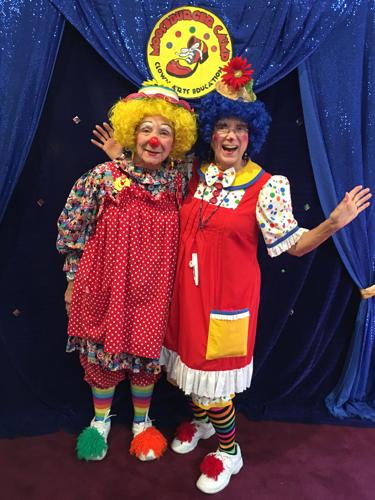
A group of lively volunteer clowns in Tellico Village is itching to bring smiles and laughter to shut-in audiences.
The Volunteer Clowns of Tellico Village held their last performance in April when the COVID-19 pandemic hit and essentially shut down the country. Kathy Kutschera, club president, worries the virus may adversely affect the club’s future.
“With COVID clamping down on everything, we just haven’t been going out,” she said. “I attended a three-day virtual clown camp two weekends ago and because they couldn’t have it in person they had it on Zoom for (34 hours). My concern was, ‘Is there a future for clowning? Are there other troupes throughout the country that are still clowning during COVID restrictions following the CDC guidelines?’ I got a resounding ‘yes’ on both answers.”
The group attempted to return to a sense of normalcy Aug. 10 after holding its first meeting in nearly seven months.
“We got together, and we did get out and did an outside thing where we stood outside of a grocery store in our area and just kind of waved signs and act kind of goofy and behind my mask is a smile,” Ingrid Warren, club member, said. “It was just to try to lighten the mood. Knowing now how long it’s going to hang on, Kathy wondered, ‘Is there a future for our kind of clowning in nursing homes?’ Nursing homes house our most fragile residents, and even if we get a vaccine, I wonder how that’s even going to change at that point.”
The local clown group has worked to put a smile on the faces of children and elderly across East Tennessee since 2004. Helen Cooke founded the organization as a suggestion from her sister to gather retired teachers and do tricks for children in hospitals, Kutschera said.
Before arriving in the Village and becoming a member, Bethann Brown got a glimpse into the clown world while living in Michigan.
“It was years ago when I did a health and humor class at the University of Western Michigan in Kalamazoo,” Brown said. “I’ve got a medical background and I was looking for something different to do, and the notion of doing clowning or hospital clowning just appealed to me. I wanted to pursue it and when we moved here, I saw that and so that’s how I became interested in it. ... I went to the (University of Tennessee) and went into gerontology, so I was gravitating more toward seniors and trying to improve their quality of their life.”
Warren moved to the Village in 2015 and gradually warmed to the idea of becoming a clown in order to help make a positive difference.
“I never considered even remotely doing such a thing in my life, but when we moved here to Tellico Village five years ago, I met Kathy and she told me a little bit about the clown group,” Warren said. “I went and sat in the back of the room when they were just doing their little gig, so it’s not necessarily like a show or a program. It’s more the connection that you bring to people in a nursing home or a hospital that are shut in, and a lot of them don’t get a lot of visitors at all.”
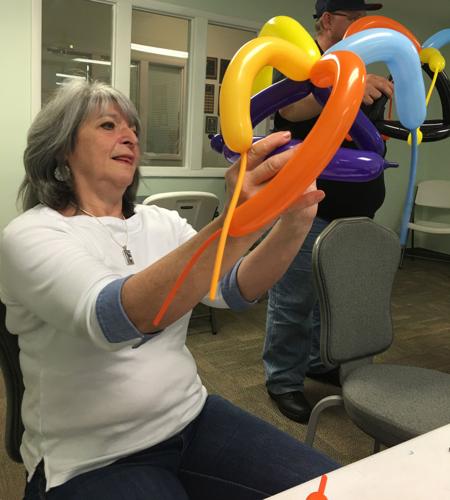
In a typical performance, three or four clowns will sing popular songs, blow up balloons, tell jokes and interact with the crowd. The group has routinely performed at The Neighborhood at Tellico Village over the years.
“It’s been old songs that they know the words of, things like ‘Zip-a-Dee-Doo-Dah’ or ‘Take Me Out to the Ball Game’ so just old, standard songs,” Kutschera said. “Usually we go around and greet everybody first and try to grab their names because if you can start calling on a couple of people while you’re walking among them or telling jokes, they love it. They’re more tuned into you.”
The group hopes to perform again soon, but members will continue to learn new tricks and techniques in the meantime.
Kutschera said the different troupes may have to resort to performing outside patients’ windows or in large spaces outdoors.
“We learned that, ‘Hey, we have to come up with other ways’,” Brown said. “Whether it’s being outside at The Neighborhood, you can walk along and they’ve got those windows or just do a lot of the social distancing. We’re working on things like that, and Kathy knows that she’s going to have to go into a place and introduce and explain what we would do and what we can’t do. Along with that and following all the guidelines, we’re in a holding pattern.”


